Rfn
James Vance
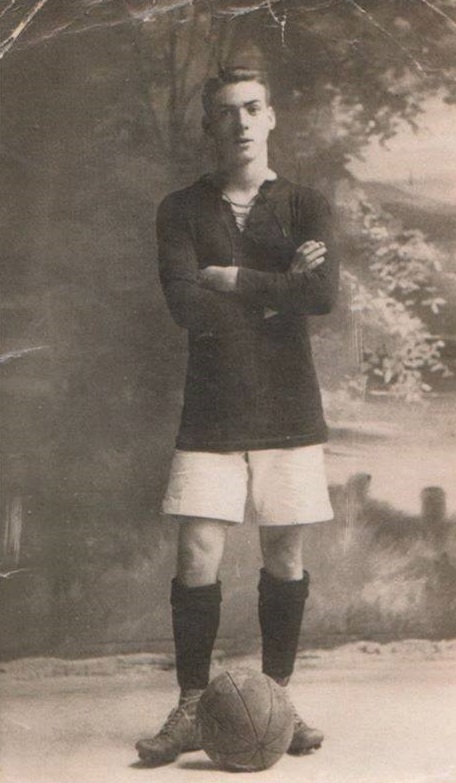
Information about birth
|
Year of birth: 1889 |
|
Place of birth: Newtownards, County Down, Ireland, United Kingdom |
General information
|
Profession: Factory Worker/ Footballer |
Army information
|
Country: England, United Kingdom |
|
Force: British Expeditionary Force |
|
Rank: Rifleman |
|
Service number: 19236 |
|
Enlistment place: Newtownards, County Down, Ireland, United Kingdom |
|
Units: — Royal Irish Rifles, 13th Bn. (1st County Down) (Last known unit) |
Information about death
|
Date of death: 16/08/1917 |
|
Place of death: Somme Farm, Belgium |
|
Cause of death: Killed in action (K.I.A.) |
|
Age: 28 |
Memorial
|
Tyne Cot Memorial Panel: 140A |
Distinctions and medals 3
|
1914-15 Star Medal |
|
British War Medal Medal |
|
Victory Medal Medal |
Points of interest 2
| #1 | Place of birth | ||
| #2 | Enlistment place |
My story
Rifleman James served in the Royal Irish Rifles, 13th Battalion, B Company, part of the 108th Brigade of the 36th (Ulster) Division. The Division was to participate in the first day of the Battle of Langemarck (16th – 18th August 1917).
The 13th Battalion Royal Irish Rifles moved into the frontline on the 15th of August. It was to attack the next day, with the 36th (Ulster) Division, at 4.45 a.m. The 36th (Ulster) Division took up position just South of the village of Sint-Juliaan. The 36th (Ulster) Division advanced with two brigades. The 109th Brigade on the left of the Divisional front and the 108th on the right. The 16th (Irish) Division was on the right of the 108th Brigade. The Battalions of the 108th Brigade who would take part in the attack were: the 9th Royal Irish Fusiliers and the 13th Royal Irish Rifles; the 12th Royal Irish Rifles were in support and the 11th Royal Irish Rifles were in reserve.
At zero hour 4.45 a.m. the Battalion moved forward behind a creeping barrage. But the Battalion could not keep up with the barrage, due to the boggy state of the ground, which was littered with water-logged shell holes and flooded remnants of trenches. The leading waves came under heavy machinegun- and rifle fire coming from pill-boxes, including the German strongpoint at Somme. They soon passed Somme, but the platoon detailed to capture and clear the strongpoint failed to do so. Hence they reached a line running from D.19.a.90.80 to D.13.c.10.40. A Company on the right was pushed too far to the right, as they couldn’t cross the wire, which the barrage failed to destroy. B Company on the left immediately suffered heavy casualties reaching C.18.d.85.00 on the left of the Divisional front.
Troops in support and those in reserve were sent forward to reinforce the attack. However the reinforcements failed to continue the push forward. Their advance was checked on the right by heavy machinegun fire coming from Gallipoli, Hindu Cottage and Aisne House. On the left the attack was held up by gun fire from Pond Farm and Hindu Cottage.
One hour after the attack had commenced the Battalion saw no other option than to retreat to their jump-off line. The men were rallied and reinforced by men of the Battalion headquarters and tried once more to take Somme. Though this final attempt was dispersed by the relentless German crossfire and the men fell back to their starting point.
The 108th Brigade’s Battalions were now scattered and intermixed along their original jump-off line. Officers re-organised the men and started consolidating the line, with the 9th Royal Irish Fusiliers on the right, the 12th Royal Irish Rifles next, then the 13th Royal Irish Rifles and the 11th Royal Irish Rifles on the Left. The 108th Brigade was relieved by the 107th Brigade on the next day.
The attack had been a total disaster. The two Irish Divisions booked almost no noticeable progress. Only the 109th Brigade managed to capture Fort Hill and Corn Hill before they were forced to dig in. No further attacks were launched by the 36th (Ulster) Division on August the 16th.
Rifleman James Vance, of the Royal Irish Rifles, 13th Battalion, B Company, was killed in action during the first day of the Battle of Langemarck. He was killed between the Battalion’s jump-off line and the line behind the German strongpoint of Somme. His body was never recovered and he is remembered on Tyne Cot Memorial.
The 13th Battalion Royal Irish Rifles moved into the frontline on the 15th of August. It was to attack the next day, with the 36th (Ulster) Division, at 4.45 a.m. The 36th (Ulster) Division took up position just South of the village of Sint-Juliaan. The 36th (Ulster) Division advanced with two brigades. The 109th Brigade on the left of the Divisional front and the 108th on the right. The 16th (Irish) Division was on the right of the 108th Brigade. The Battalions of the 108th Brigade who would take part in the attack were: the 9th Royal Irish Fusiliers and the 13th Royal Irish Rifles; the 12th Royal Irish Rifles were in support and the 11th Royal Irish Rifles were in reserve.
At zero hour 4.45 a.m. the Battalion moved forward behind a creeping barrage. But the Battalion could not keep up with the barrage, due to the boggy state of the ground, which was littered with water-logged shell holes and flooded remnants of trenches. The leading waves came under heavy machinegun- and rifle fire coming from pill-boxes, including the German strongpoint at Somme. They soon passed Somme, but the platoon detailed to capture and clear the strongpoint failed to do so. Hence they reached a line running from D.19.a.90.80 to D.13.c.10.40. A Company on the right was pushed too far to the right, as they couldn’t cross the wire, which the barrage failed to destroy. B Company on the left immediately suffered heavy casualties reaching C.18.d.85.00 on the left of the Divisional front.
Troops in support and those in reserve were sent forward to reinforce the attack. However the reinforcements failed to continue the push forward. Their advance was checked on the right by heavy machinegun fire coming from Gallipoli, Hindu Cottage and Aisne House. On the left the attack was held up by gun fire from Pond Farm and Hindu Cottage.
One hour after the attack had commenced the Battalion saw no other option than to retreat to their jump-off line. The men were rallied and reinforced by men of the Battalion headquarters and tried once more to take Somme. Though this final attempt was dispersed by the relentless German crossfire and the men fell back to their starting point.
The 108th Brigade’s Battalions were now scattered and intermixed along their original jump-off line. Officers re-organised the men and started consolidating the line, with the 9th Royal Irish Fusiliers on the right, the 12th Royal Irish Rifles next, then the 13th Royal Irish Rifles and the 11th Royal Irish Rifles on the Left. The 108th Brigade was relieved by the 107th Brigade on the next day.
The attack had been a total disaster. The two Irish Divisions booked almost no noticeable progress. Only the 109th Brigade managed to capture Fort Hill and Corn Hill before they were forced to dig in. No further attacks were launched by the 36th (Ulster) Division on August the 16th.
Rifleman James Vance, of the Royal Irish Rifles, 13th Battalion, B Company, was killed in action during the first day of the Battle of Langemarck. He was killed between the Battalion’s jump-off line and the line behind the German strongpoint of Somme. His body was never recovered and he is remembered on Tyne Cot Memorial.
Sources 2
|
13 Battalion Royal Irish Rifles (1st County Dowm), (The National Archives, KEW (TNA), WO 95/2506/3 ). https://discovery.nationalarchives.gov.uk/details/r/C14303 Further reference |
|
McCarthy C., The Third Ypres Passchendaele. The Day-by-Day Account, ( London, Arms & Armour Press, 1995), pg. 48-51. Sources used |
More information 3
|
Commonwealth War Graves Commission Database https://www.cwgc.org/find-records/find-war-dead/casualty-details/825358 |
|
Namenlijst (In Flanders Fields Museum) https://namenlijst.org/publicsearch/#/person/_id=c820e6de-e24c-4cb0-9896-af3ae777d1bd |
|
Lives of the First World War (Imperial War Museum) https://livesofthefirstworldwar.iwm.org.uk/lifestory/4547031 |