Pte
John Richard Worseldine
Information about birth
|
Date of birth: 26/03/1895 |
|
Place of birth: St. Pancras, London, England, United Kingdom |
General information
|
Last known residence: 18, Clarence Road, St.Pancras, London, England, United Kingdom |
|
Profession: Servant |
|
Religion: Church of England |
Army information
|
Country: Verenigd Koninkrijk |
|
Force: British Expeditionary Force |
|
Rank: Private |
|
Service number: 15724 |
|
Enlistment place: St. Pancras, London, England, United Kingdom |
|
Units: — 43rd Machine Gun Company (Last known unit) |
Information about death
|
Date of death: 22/08/1917 |
|
Place of death: Hooge Crater, Belgium |
|
Cause of death: Killed in action (K.I.A.) |
|
Age: 22 |
Cemetery
|
New Irish Farm Cemetery Plot: XXVIII Row: D Grave: 8 |
Distinctions and medals 2
|
British War Medal Medal |
|
Victory Medal Medal |
Points of interest 4
| #1 | Place of birth | ||
| #2 | Last known residence | ||
| #3 | Enlistment place | ||
| #4 | Sterfteplaats |
My story
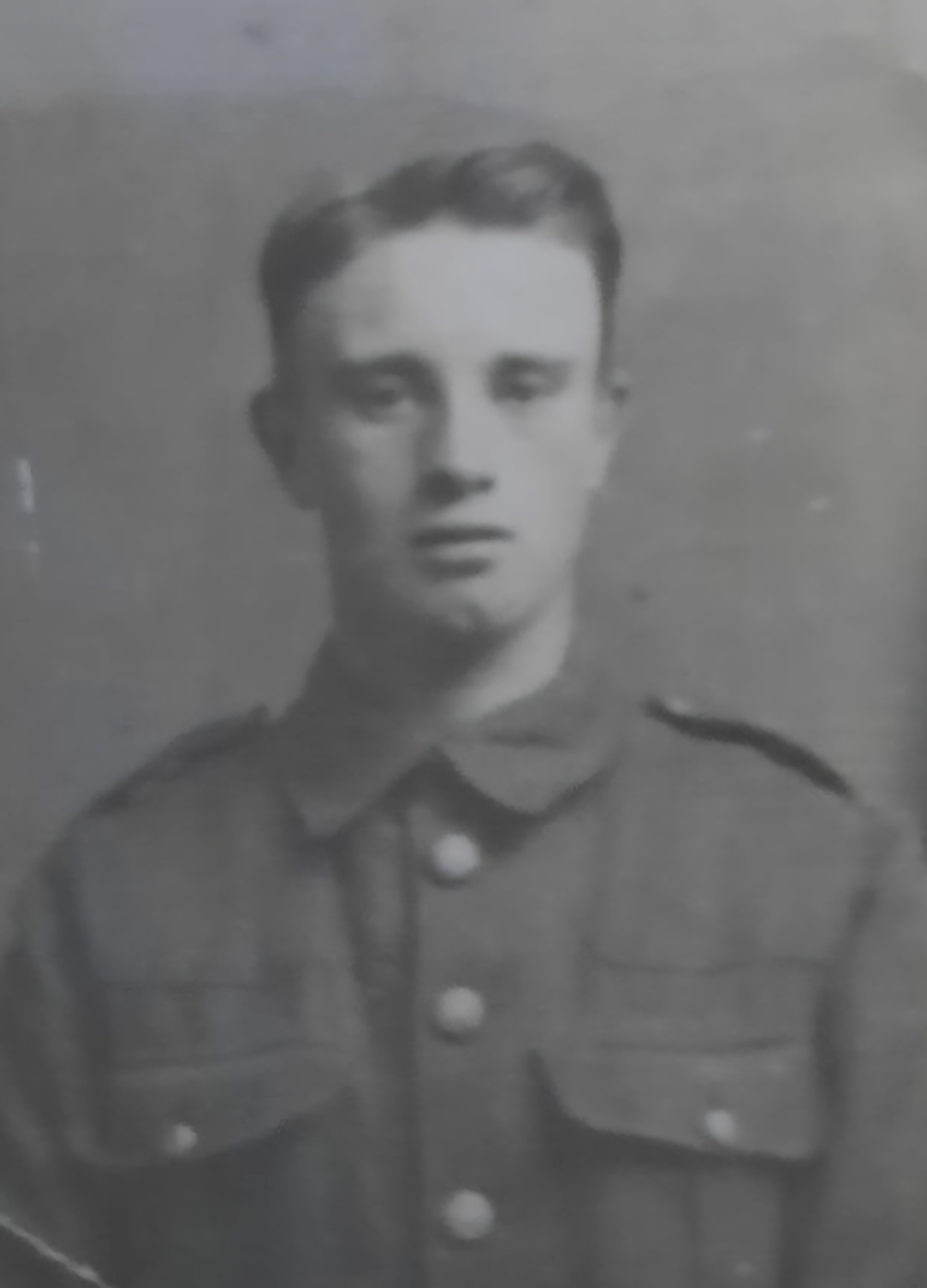
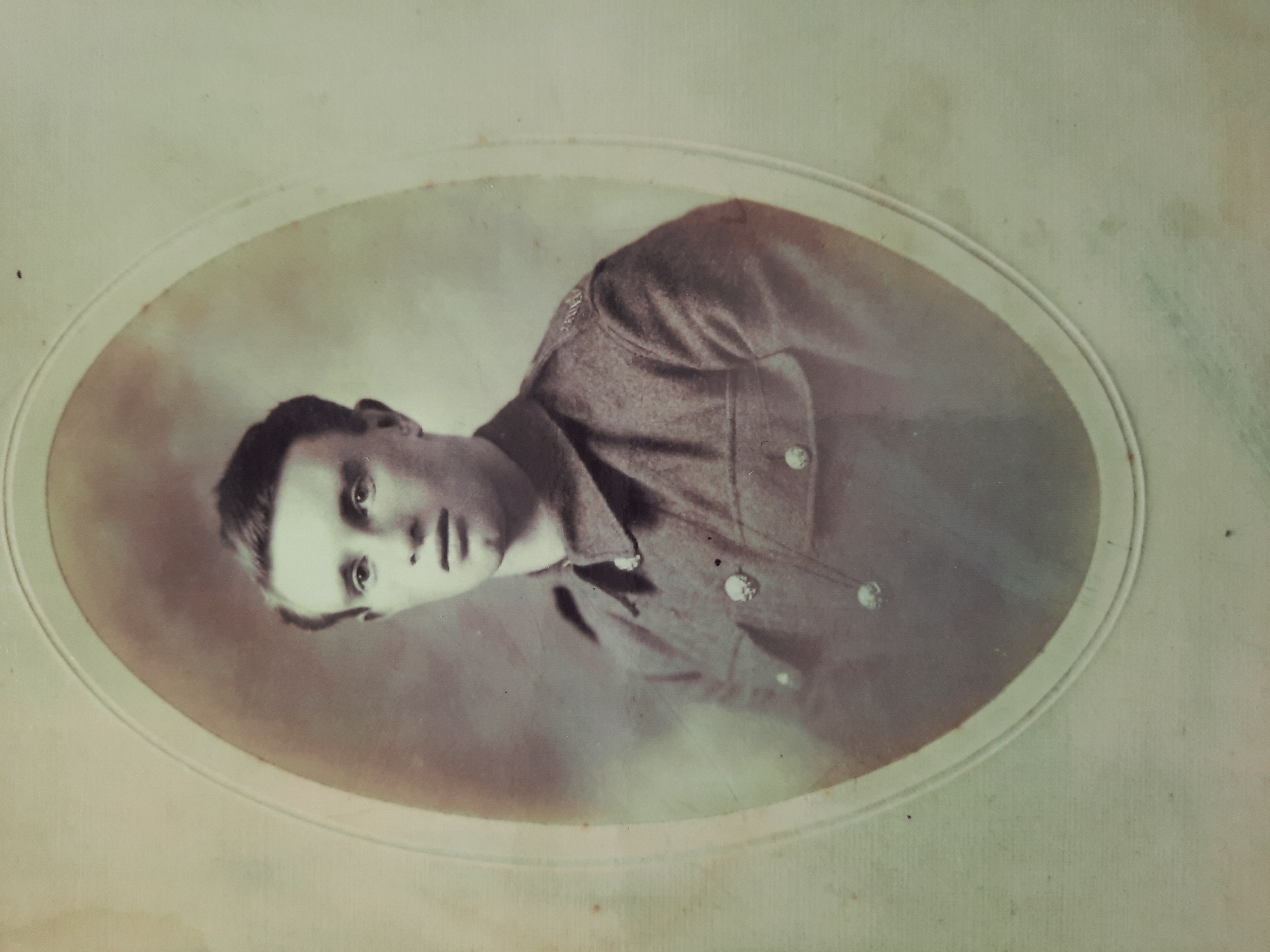
John Richard ("Dick") Worseldine was born in 1895 in Saint Pancras, London, the son of John Freeman Worseldine and Emily Worseldine. He grew up in a family with four sisters and two brothers. Remarkably, he was not baptized until 7 September 1900, when he was christened together with his younger brother and two younger sisters.
He attended St. Anne’s School in London. After leaving school, he worked as a page boy in the service of a doctor.
Upon joining the British Army, he was initially assigned to the East Kent Regiment (service number 886). He was later transferred to the 43rd Company of the Machine Gun Corps, part of the 43rd Brigade of the 14th (Light) Division.
From 20 August 1917 onwards, his company was deployed east of Hooge in support of the 14th (Light) Division. Sixteen machine guns were positioned: eight for defensive duties, six to assist in consolidating captured positions, and two held in reserve.
On 22 August 1917, British units attacked Inverness Copse with support from the 43rd Company, Machine Gun Corps. The machine gunners played an important role by engaging several German targets and supporting the advance. Afterwards, the guns were repositioned to cover the ground between Inverness Copse and Glencorse Wood.
The German forces put up fierce resistance. In particular, British machine-gun crews came under fire from German snipers operating in the wooded area south of Inverness Copse.
The company suffered heavy losses on 22 and 23 August: eight soldiers were killed, one man was reported missing, and one officer together with 21 other ranks were wounded.
John Richard Worseldine was the missing soldier. His body was not recovered until 1920, when it was found near the Menin Road close to Hooge Crater. He was identified by his identity disc. On 4 June 1920, he was reburied in New Irish Farm Cemetery.
He was only 22 years old.
Sources 7
|
43rd Machine Gun Company (The National Archives, Kew (TNA), WO 95/1910/5). https://www.nationalarchives.gov.uk/ Sources used |
|
British Army World War I Medal Rolls Index Cards, 1914-1920 (The National Archives, Kew (TNA), WO 372) https://www.nationalarchives.gov.uk/ Sources used |
|
Census Returns of England and Wales, 1901 (The National Archives, Kew (TNA), RG13). https://www.nationalarchives.gov.uk/ Sources used |
|
Census Returns of England and Wales, 1911 (The National Archives, Kew (TNA), RG14). https://www.nationalarchives.gov.uk/ Sources used |
|
McCarthy, Chris. Passchendaele: The Day by Day Account (Londen: Arms & Armour Press, 1995), p 64. Sources used |
|
Soldiers' Effects Records (National Army Museum, Chelsea (NAM) 1901-60; NAM Accession Number: 1991-02-333). https://www.nationalarchives.gov.uk/ Sources used |
|
War Office and Air Ministry: Service Medal and Award Rolls, First World War (The National Archives, Kew (TNA), WO 329). https://www.nationalarchives.gov.uk/ Sources used |
More information 4
|
CWGC https://www.cwgc.org/find-records/find-war-dead/casualty-details/453329 |
|
Namenlijst (In Flanders Fields Museum) https://namenlijst.org/publicsearch/#/person/_id=3c8259bc-c991-46d0-89be-6a892557d9c3 |
|
Lives of the First World War (Imperial War Museum) https://livesofthefirstworldwar.iwm.org.uk/lifestory/4884379 |
|
A Street Near You https://astreetnearyou.org/person/453329/ |