Pte
Henry Atchison
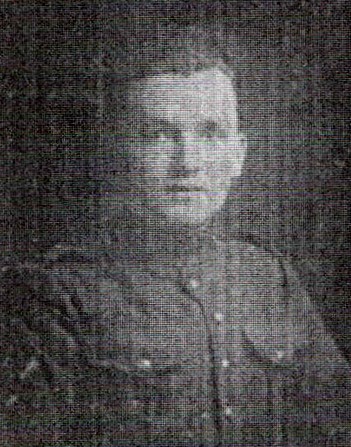
Information about birth
|
Date of birth: 31/03/1898 |
|
Place of birth: Cornwall, Ontario, Canada |
General information
|
Last known residence: Marlborough Street, Cornwall, Ontario, Canada |
|
Profession: Labourer |
|
Religion: Presbyterian |
Army information
|
Country: Canada |
|
Force: Canadian Expeditionary Force |
|
Rank: Private |
|
Service number: 1042258 |
|
Enlistment date: 24/10/1916 |
|
Enlistment place: Renfrew, Ontario, Canada |
|
Units: — Canadian Infantry, 21st Bn. (Eastern Ontario) (Last known unit) |
Information about death
|
Date of death: 03/10/1917 |
|
Cause of death: Killed in action (K.I.A.) |
|
Age: 19 |
Cemetery
|
Tyne Cot Cemetery Plot: I Row: D Grave: 2 |
Points of interest 3
| #1 | Place of birth | ||
| #2 | Last known residence | ||
| #3 | Enlistment place |
My story
Henry Atchison was born in Cornwall, Ontario, Canada on 31 March 1898. His mother's name was Margaret ‘Maggie’ Atchison. He continued to live in Cornwall, on Marlborough Street, and worked there as a labourer. On 24 October 1916, he enlisted in Renfrew, Ontario, for army service in the Canadian Expeditionary Force. He served in the 21st Battalion Canadian Infantry Regiment (4th Brigade, 2nd Division) during the war.
From 2 to 5 November 1917, the 21st Battalion advanced to the Potijze area, east of Ypres, in accordance with Operation Order 132. This order required the battalion to move into the new area east of Ypres. The battalion trained at Caestre Station around 12.45 am and arrived at Potijze in the dark, as they did not move towards Potijze Corner until 6.30 pm. They then moved forward to clear the front line south-west of Passchendaele. The relief was completed by 2.15 am on 3 November 1917.
In the early morning of 3 November 1917, the battalion had relieved the 72nd Battalion Canadian Infantry Regiment for Passchendaele. Meanwhile, the Germans made determined attacks and penetrated the trenches north-east of Crest Farm. This was quickly driven out. At 5.10 am, German storm troops attacked the company's front on the right. The German forward surge forced the battalions to retreat 50 yards, but the Canadians reorganised and counterattacked. The line was then restored. At 5.40am, the Germans attacked again, but were beaten back by Lewis Guns and gunfire from the Canadians. On the night of 3 to 4 November, the line of outposts was drawn up about 75 to 120 yards in front of the Canadian front line. On the night of 4-5 November, the battalion was relieved by the 29th Battalion Canadian Infantry Regiment and another outpost was relieved.
The operations in early November caused many casualties: one soldier died of his wounds, 91 soldiers were missing and 43 soldiers were killed, including 19-year-old Henry Atchison. He is buried in Tyne Cot Cemetery (Plot I, Row D, Grave 2).
Sources 5
|
McCarthy, Chris. Passchendaele: The Day by Day Account (Londen: Arms & Armour Press, 1995), 159. Sources used |
|
Personnel Records of the First World War (Library and Archives Canada, Ottawa (LAC) RG 150, Accession 1992-93/166, Box 279 - 34). https://recherche-collection-search.bac-lac.gc.ca/eng/home/index Sources used |
|
War diaries: 21st Canadian Infantry Battalion (Library and Archives Canada, Ottawa (LAC), RG9-III-D-3, Volume number: 4931, Microfilm reel number: T-10731--T-10732, File number: 410). https://library-archives.canada.ca/eng Sources used |
|
War diaries: 4th Canadian Infantry Brigade (Library and Archives Canada, Ottawa (LAC), RG9-III-D-3, Volume number: 4882, Microfilm reel number: T-10679, File number: 240). https://library-archives.canada.ca/eng Sources used |
|
War Graves Registers: Circumstances of Death (Library and Archives Canada, Ottawa (LAC), RG150, 1992-93/314; Volume number: 148). https://library-archives.canada.ca/ Sources used |
More information 4
|
Commonwealth War Graves Commission Database https://www.cwgc.org/find-records/find-war-dead/casualty-details/461775 |
|
Lives of the First World War (Imperial War Museum) https://livesofthefirstworldwar.iwm.org.uk/lifestory/5550037 |
|
The Canadian Virtual War Memorial https://www.veterans.gc.ca/en/remembrance/memorials/canadian-virtual-war-memorial/detail/461775 |
|
Namenlijst (In Flanders Fields Museum) https://namenlijst.org/publicsearch/#/person/_id=edb29072-6cbc-4399-a3b7-ddbf5cf49ba5 |