Pte
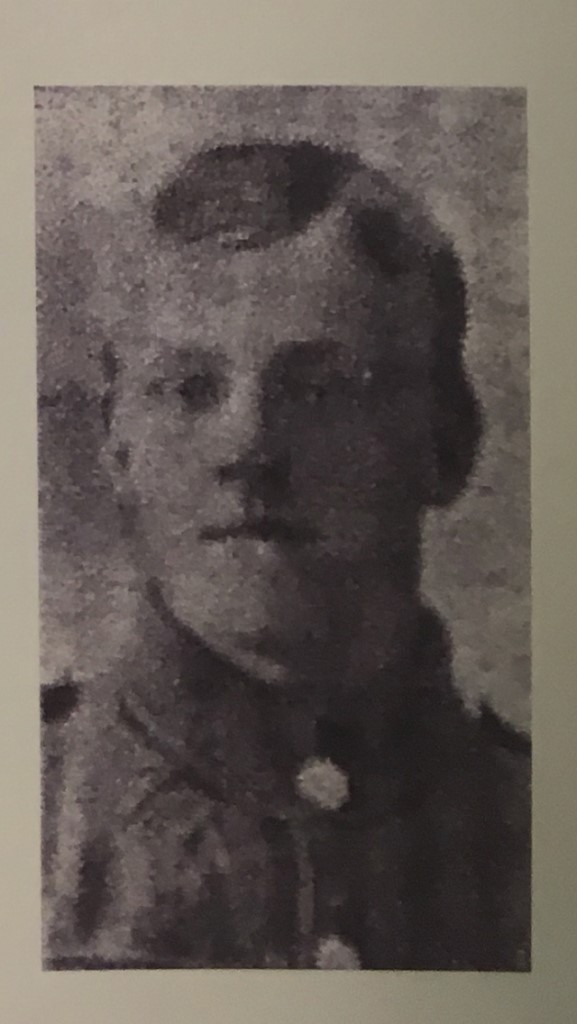
Harold Dyson
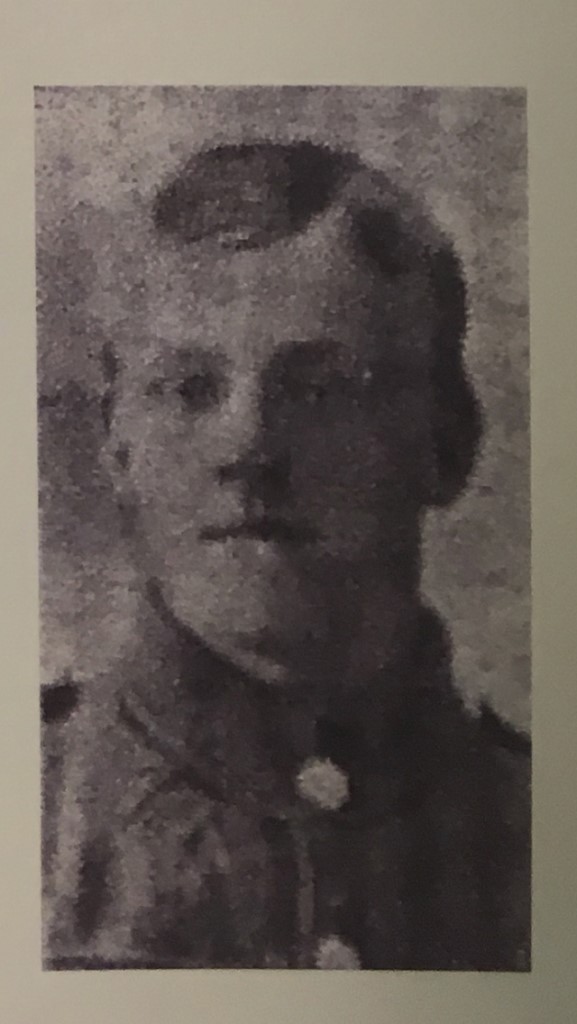
Information about birth
|
Year of birth: 1897 |
|
Place of birth: Linthwaite, Golcar, Huddersfield, Yorkshire, England, United Kingdom |
General information
|
Last known residence: 79, Scarbro Terrace, Golcar, Huddersfield, Yorkshire, England, United Kingdom |
|
Profession: Weaver |
Army information
|
Country: England, United Kingdom |
|
Force: British Expeditionary Force |
|
Rank: Private |
|
Service number: 24447 |
|
Enlistment date: 14/01/1916 |
|
Enlistment place: Milnsbridge, Huddersfield, West Yorkshire, England, United Kingdom |
|
Units: — Duke of Wellington's (West Riding Regiment), 1/6th Bn. (Last known unit) — Duke of Wellington's (West Riding Regiment), 1/7th Bn. — Duke of Wellington's (West Riding Regiment), 2nd Bn. |
Information about death
|
Date of death: 08/10/1917 |
|
Place of death: Tussen Calgary Grange en Korek, Belgium |
|
Cause of death: Killed in action (K.I.A.) |
|
Age: 20 |
Memorial
|
Tyne Cot Memorial Panel: 83 |
Distinctions and medals 2
|
British War Medal Medal |
|
Victory Medal Medal |
Points of interest 4
| #1 | Place of birth | ||
| #2 | Last known residence | ||
| #3 | Enlistment place | ||
| #4 | Place of death (approximate) |
My story
Harold Dyson was born in the spring of 1897 in Linthwaite, Golcar (Yorkshire). He grew up in Golcar with his parents, Fred and Maria, his brothers Willy, Arthur and Frank, and his sister Nellie. At the age of 14, he worked as a spinner in a textile mill alongside his father and older brother. He was later recorded as a weaver.
At the age of 19, he enlisted in the British Army and was assigned to the Duke of Wellington’s (West Riding) Regiment. After completing his training in Great Britain, he was sent to Étaples on 18 October 1916 and, from 2 November, served with the 2nd Battalion. On 14 December 1916, he had already been admitted to hospital suffering from trench feet. From 27 June 1917 onwards, he served with the 1/6th Battalion Duke of Wellington’s (West Riding) Regiment, part of the 147th Brigade of the 49th (West Riding) Division.
On 7 September 1917, Harold was slightly wounded during a rifle grenade exercise. A rifle grenade that he fired did not travel far enough and exploded only a few metres away. He managed to take cover in time and suffered only minor facial injuries.
At the beginning of October 1917, the 49th Division was ordered to relieve New Zealand units in the area of ’s Graventafel in preparation for a new attack on 9 October. In pouring rain, the 1/6th Battalion Duke of Wellington’s (West Riding) Regiment relieved the 1st Battalion Otago Regiment in the positions near Calgary Grange. These positions consisted of water-filled shell craters, and on 6 October it rained throughout the day as well.
On 7 October, German artillery fire intensified and German troops preparing for an attack were observed near “Peter Pan”. British artillery, rifle and machine-gun fire succeeded in breaking up the German attack before it reached the British positions. One advantage of the waterlogged ground and deep mud was that the impact of many German shells was absorbed, resulting in relatively few casualties.
On 8 October 1917, preparations began for a new British attack scheduled for the following day. The 146th and 148th Brigades were to carry out this attack in the sector of the 49th Division. In the early morning of 9 October, the 1/6th Battalion Duke of Wellington’s (West Riding) Regiment withdrew slightly to Korek to give the attacking troops sufficient room and to avoid casualties from the creeping barrage.
Private Harold Dyson was killed by shellfire on 8 October 1917 at the age of 20. His body was never recovered. His name is therefore commemorated on the Tyne Cot Memorial, Panel 83.
Sources 9
|
147 Infantry Brigade: 1/6 Battalion Duke of Wellington's (West Riding Regiment). (The National Archives, KEW (TNA), WO 95/2801/3). https://www.nationalarchives.gov.uk/ Sources used |
|
Barber Stephen, Guiseley Terriers, A Small Part of the Great War, a history of the 1/6 Battalion, Duke of Wellington's (West Riding) Regiment, (Barnsley, Pen & Sword Books Ltd, 47 Church Street, 2018), 146-147. Sources used |
|
British Army World War I Medal Rolls Index Cards, 1914-1920 (The National Archives, Kew (TNA), WO372). https://www.nationalarchives.gov.uk/ Sources used |
|
British Army World War I Service Medal and Awards Rolls, 1914-1920 (The National Archives, Kew (TNA), WO 329). https://www.nationalarchives.gov.uk/ Sources used |
|
Census Returns of England and Wales, 1901 (The National Archives, Kew (TNA), RG13). https://www.nationalarchives.gov.uk/ Sources used |
|
Census Returns of England and Wales, 1911 (The National Archives, Kew (TNA), RG14). https://www.nationalarchives.gov.uk/ Sources used |
|
Harold Dyson, ancestry.com https://www.ancestry.com/family-tree/person/tree/174006266/person/222260144166/facts Sources used |
|
Soldier's Effects records (National Army Museum, Chelsea (NAM) 1901-60; NAM Accesion Number: 1991-02-333). https://www.nam.ac.uk/ Sources used |
|
UK, British Army world War I service Records, 1914-1920. https://www.nationalarchives.gov.uk/ Sources used |
More information 4
|
Commonwealth War Graves Commission Database https://www.cwgc.org/find-records/find-war-dead/casualty-details/1630704 |
|
Namenlijst (In Flanders Fields Museum) https://namenlijst.org/publicsearch/#/person/_id=2f633c31-d6af-4045-9a9f-793abf738afb |
|
Lives of the First World War (Imperial War Museum) https://livesofthefirstworldwar.iwm.org.uk/lifestory/2356663 |
|
A Street Near You https://astreetnearyou.org/person/1630704/ |