Pte
Arthur Nicol
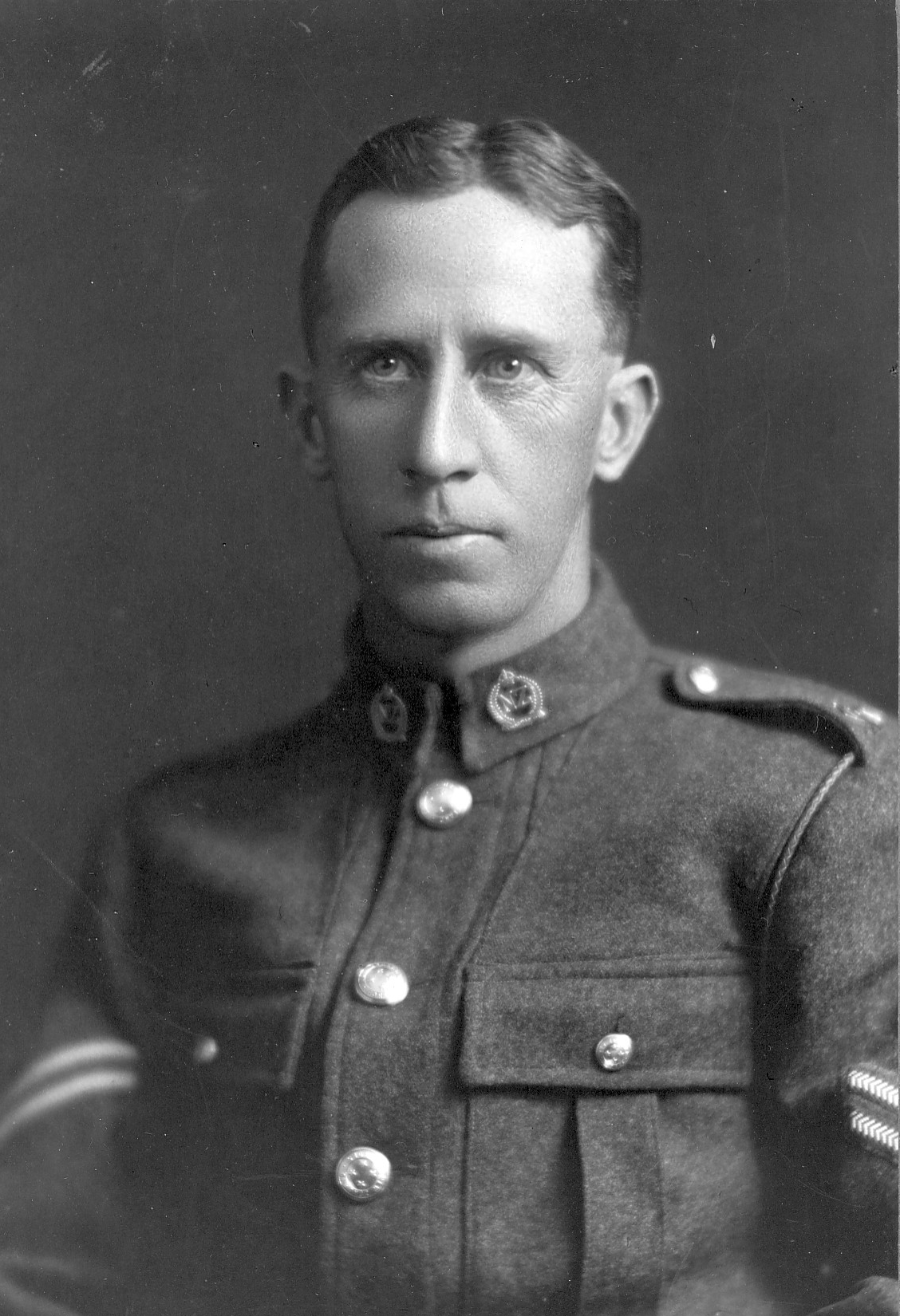
Information about birth
|
Date of birth: 21/03/1887 |
|
Place of birth: Glentunnel, Canterbury, New Zealand |
General information
|
Last known residence: Glentunnel, Canterbury, New Zealand |
|
Profession: Miner |
|
Religion: Presbyterian |
Army information
|
Country: New Zealand |
|
Force: New Zealand Expeditionary Force |
|
Rank: Private |
|
Service number: 46200 |
|
Enlistment date: 05/01/1917 |
|
Enlistment place: Christchurch, Canterbury, New Zealand |
|
Units: — Canterbury Regiment, 2nd Bn. (Last known unit) |
Information about death
|
Date of death: 12/10/1917 |
|
Place of death: Marsh Bottom, Passchendaele, Belgium |
|
Cause of death: Killed in action (K.I.A.) |
|
Age: 30 |
Cemetery
|
Tyne Cot Cemetery Plot: XXI Row: B Grave: 1 |
Points of interest 5
| #1 | Place of birth | ||
| #2 | Last known residence | ||
| #3 | Place of work | ||
| #4 | Enlistment place | ||
| #5 | Place of death (approximate) |
My story
Arthur Nicol was born on 21 March 1887 in Glentunnel, Canterbury, New Zealand. He was the son of Alexander Nicol and Isabella Jarvie. Before enlisting, he worked as a miner for the Waipa Coal Company. On 5 January 1917, he enlisted at the age of 29 in Christchurch, Canterbury. He was subsequently assigned to the 2nd Battalion Canterbury Regiment, 2nd Infantry Brigade, New Zealand Division.
Arthur was killed in action on 12 October 1917 during the First Battle of Passchendaele, part of the Passchendaele Offensive. On 11 October, the officers of the attacking New Zealand battalions were briefed for the final time on what to expect on 12 October. That day, the New Zealanders’ objective was to capture three objective lines near Bellevue Spur and Mosselmarkt. The first objective line ran from the Ravebeek at Waterfields to Bellevue and was assigned to the 2nd Battalion Otago Regiment. The second objective line ran from Graf along Meetcheele to 365 metres southwest of Mosselmarkt and was assigned to the 1st Battalion Otago Regiment. The third and final objective line ran from north of Passchendaele to Vindictive Crossroads and was assigned to the 1st Battalion Canterbury Regiment. On the day of the attack, the troops of the 2nd Battalion Canterbury Regiment were to remain in reserve and only advance in support if necessary.
At 20:30 on 11 October, the troops of the attacking battalions were in their starting positions at Marsh Bottom. Through the night, rain continued on and off, and the stormy weather persisted until the time of the attack. At 05:25, the attack began under a weak Allied barrage. It quickly became clear that it would be a bloodbath. The Germans opened heavy machine gun fire on the advancing troops, and much of the barbed wire was still intact. Several bunkers near Bellevue also opened deadly fire. The 2nd and 12th Companies of the 2nd Battalion Canterbury Regiment were ordered forward to assist in the attack. Attempts to break through the German positions on the right and left flanks only resulted in more casualties among the New Zealand ranks. By 11:00, all units were involved in the attack, but no further breakthrough was achieved. Every movement within sight of the enemy resulted in casualties. It was decided not to push further and to consolidate the line the troops had reached, between Marsh Bottom and Bellevue. At 12:45, orders were received to resume the attack at 15:00. These orders were eventually withdrawn after a conference between the senior officers. At 16:00, a reorganisation of the frontline was ordered. The 1st and 2nd Battalion Otago Regiment remained in the front line, and the 2nd Battalion Canterbury Regiment was withdrawn to two lines running from Calgary Grange and Korek to the present-day 's Graventafelstraat. The three objective lines of the day remained firmly in German hands. In the evening, rain began to fall again, and the front quieted. On 13 October, the wounded from the battlefield were cleared, and two companies were sent to plug a gap in the front line. The following day, the battalion was withdrawn from the front line. The battalion lost 109 killed and 267 wounded.
Arthur was killed at the age of 30. After the war, his body was found near Marsh Bottom and was subsequently reburied at Tyne Cot Cemetery, Plot XXI, B, 1.
Sources 5
|
2 Canterbury Infantry Battalion - War Diary, 1 - 31 October 1917 (Archives NZ/WA78/box124/R23624788) https://www.archives.govt.nz/ Sources used |
|
Ferguson David, The History of the Canterbury Regiment, NZEF 1914-1919, (Uckfield: the Naval & Military Press Ltd, RidgewoodIndustrial Park, 1921), 183-204. Sources used |
|
Headquarters New Zealand and Australian Division - New Zealand Division - General Staff - War Diary, 1 October - 31 October 1917 (Archives NZ/WA20/box21/R23487439) https://www.archives.govt.nz/ Sources used |
|
McCarthy, Chris. Passchendaele: The Day by Day Account (Londen: Arms & Armour Press, 1995), p. 129-32. Sources used |
|
New Zealand Defence Force Personnel Records (Archives New Zealand, Wellington (ANZ), box 81, R21380596). https://www.archives.govt.nz/ Sources used |
More information 5
|
The NZEF Project (UNSW Canberra) https://nzef.adfa.edu.au/showPerson?pid=showPerson?pid=190092 |
|
Namenlijst (In Flanders Fields Museum) https://namenlijst.org/publicsearch/#/person/_id=bb5ba3d3-33bb-4e64-a842-f923216b0f55 |
|
Namenlijst (In Flanders Fields Museum) https://namenlijst.org/publicsearch/#/person/_id=7180610 |
|
Online Cenotaph (Auckland Museum) https://www.aucklandmuseum.com/war-memorial/online-cenotaph/record/C11493?srt=relevance&n=46200&from=%2Fwar-memorial%2Fonline-cenotaph%2Fsearch&ordinal=1 |
|
Commonwealth War Graves Commission Database https://www.cwgc.org/find-records/find-war-dead/casualty-details/464105 |