Pte
Arthur Norman McLeod
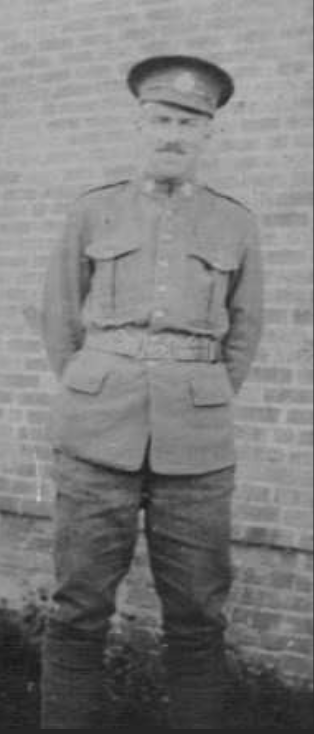
Information about birth
|
Date of birth: 09/10/1884 |
|
Place of birth: Studholm, New Brunswick, Canada |
General information
|
Last known residence: Penobsquis, Kings County, New Brunswick, Canada |
|
Profession: Farmer |
|
Religion: Baptist |
Army information
|
Country: Canada |
|
Force: Canadian Expeditionary Force |
|
Rank: Private |
|
Service number: 709551 |
|
Enlistment date: 28/10/1915 |
|
Enlistment place: Sussex, New Brunswick, Canada |
|
Units: — Canadian Infantry, 26th Bn. (New Brunswick) (Last known unit) |
Information about death
|
Date of death: 06/11/1917 |
|
Place of death: Seine, Zonnebeke, Belgium |
|
Cause of death: Killed in action (K.I.A.) |
|
Age: 33 |
Cemetery
|
Tyne Cot Cemetery Plot: I Row: C Grave: 29 |
Distinctions and medals 2
|
British War Medal Medal |
|
Victory Medal Medal |
Points of interest 3
| #1 | Place of birth | ||
| #2 | Enlistment place | ||
| #3 | Place of death (approximate) |
My story
Arthur Norman Mcleod was born in Studholm, New Brunswick, Canada, on October 9, 1884. He worked as a farmer. He enlisted on October 28, 1915.
Arthur was killed in action on November 6, 1917, during the capture of Passchendaele, part of the Battle of Passchendaele. The 26th Battalion (New Brunswick) departed from Potijze around 11:00 PM on November 4, heading for Seine Dump, where it arrived around 1:00 AM the following day. There, the troops dug in and attempted to rest a bit before moving out again around 11:00 PM that evening toward the starting positions for the November 6 attack. These starting positions stretched from what is now Passendale Street to near Vienna Cottages and were reached on November 6 between 2:30 a.m. and 3:00 a.m. The attack on Passchendaele was to be carried out by battalions of the 6th Canadian Infantry Brigade, which were tasked with taking the village itself. The men of the 26th Battalion (New Brunswick) of the 5th Canadian Infantry Brigade were also to join the attack and would take the right flank. Their objective line ran in an arc from just northeast of the village to just south of the village, just past Tiber.
Shortly after arriving at their starting positions, the battalion’s troops came under artillery and machine-gun fire, resulting in the first casualties. The attack began at 6:00 a.m. and was carried out by “A,” “B,” and “D” Companies; “C” Company remained in reserve. A bombardment provided cover for the advancing troops, and at 6:20 a.m. An airstrike provided cover for the advancing troops, and by 6:20 a.m., the far-right positions were already in the hands of “A” Company. Subsequently, at 6:40 a.m. and 7:00 a.m., the central and far-left positions were secured by “B” Company and “D” Company. All companies encountered relatively little resistance but did suffer several casualties. Machine gun crews provided the most resistance. After capturing the enemy positions, contact was established between the companies, and the lines were consolidated. Throughout the day, the Canadians endured artillery, sniper, and machine-gun fire. Enemy fighter planes also bombed the newly captured positions all day long. During the night of November 6–7, several patrols were sent out. A German counterattack was repelled by artillery. On November 7, the newly captured front remained relatively calm, though the Canadians still endured several minor bombardments. At 10 p.m. that same day, the battalion was relieved by the 25th Battalion (Nova Scotia Rifles). During the capture of the enemy positions, 205 German prisoners were taken, but the battalion suffered 42 killed, 206 wounded, and 1 missing.
Arthur died while moving from Seine Dump to Potijze. A shell exploded there, killing him and one other person. He died at the age of 33 and is buried at Tyne Cot Cemetery, where he remains to this day
Sources 4
|
Arthur Norman McLeod, ancestry.com https://www.ancestry.com/family-tree/person/tree/67883534/person/38513276126/facts Sources used |
|
Library and Archives Canada; War Graves Registers: Circumstances of Death; Box: 222 https://library-archives.canada.ca/eng Sources used |
|
RG 150, Accession 1992-93/166, Box 7073 - 58 https://central.bac-lac.gc.ca/.redirect?app=pffww&id=163432&lang=eng Sources used |
|
War diaries: 26th Canadian Infantry Battalion (Library and Archives Canada, Ottawa (LAC), RG9-III-D-3, Volume number: 4934, Microfilm reel number: T-10737 - T-10738, File number: 421). https://library-archives.canada.ca/eng Sources used |
More information 4
|
Commonwealth War Graves Commission Database https://www.cwgc.org/find-records/find-war-dead/casualty-details/463818 |
|
Namenlijst (In Flanders Fields Museum) https://namenlijst.org/publicsearch/#/person/_id=791b559e-d584-4104-9175-dd4d4afa34eb |
|
Lives of the First World War (Imperial War Museum) https://livesofthefirstworldwar.iwm.org.uk/lifestory/5639744 |
|
The Canadian Virtual War Memorial https://www.veterans.gc.ca/en/remembrance/memorials/canadian-virtual-war-memorial/detail/598396 |