Capt
James Hislop
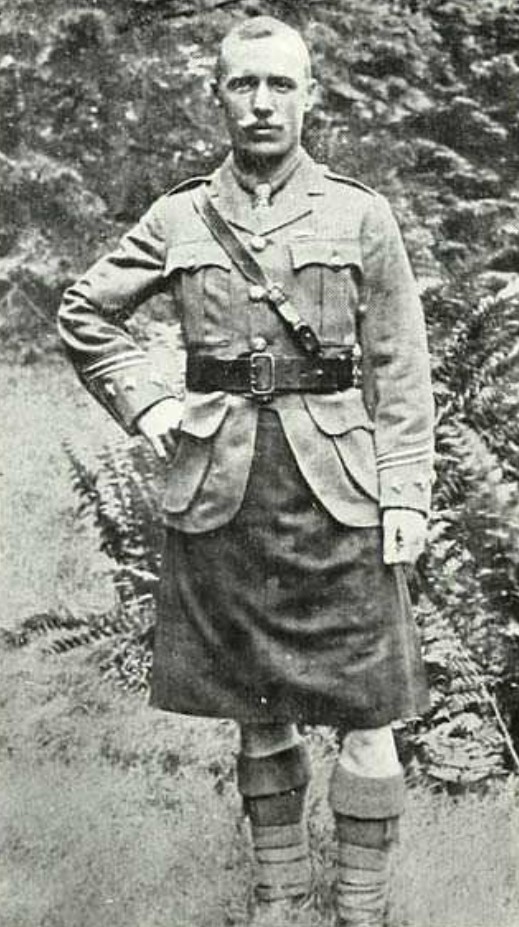
Information about birth
|
Year of birth: 1885 |
|
Place of birth: Peebles, Peeblesshire, Scotland, United Kingdom |
General information
|
Profession: Professional Soldier |
Army information
|
Country: Scotland, United Kingdom |
|
Force: British Expeditionary Force |
|
Rank: Captain |
|
Units: — Queen’s Own Cameron Highlanders, 6th Bn. (Last known unit) |
Information about death
|
Date of death: 31/07/1917 |
|
Place of death: Hill 35, Zonnebeke, Belgium |
|
Cause of death: Killed in action (K.I.A.) |
|
Age: 32 |
Cemetery
|
Tyne Cot Cemetery Plot: XIII Row: C Grave: 35 |
Distinctions and medals 3
|
British War Medal Medal |
|
Military Cross Medal |
|
Victory Medal Medal |
Points of interest 2
| #1 | Place of birth | ||
| #2 | Place of death (approximate) |
My story
James Hislop was born around 1885 in Peebles, Scotland. He began his military career at an early age. In 1901, at barely 15 years old, he enlisted in the Cameron Highlanders at Inverness. To do so, James lied about his age, claiming to be 18.
By 1911, James was serving as a Corporal with the 2nd Battalion Cameron Highlanders in India. During the First World War, by the time of the Battle of Passchendaele, he held the rank of Acting Captain in the Queen’s Own Cameron Highlanders, 6th Battalion, part of the 45th Brigade of the 15th (Scottish) Division. In July 1917, the division moved to Flanders to take part in the forthcoming offensive.
On 31 July 1917, the 15th Division attacked the Frezenberg Ridge with two brigades in the lead and one in support. Once the 44th and 46th Brigades had secured the second objective, the Black Line, the 45th Brigade with the 6th Camerons was to advance towards the final objective, the Green Line, along the Langemark–Zonnebeke road. The ground between the Frezenberg Ridge and the road was dominated by a low ridge running west to east. At its western end stood Hill 35, followed by Hill 37, through which the fortified Wilhelmsstellung ran. The surrounding landscape was dotted with large farmhouses that had been turned into bunkers and strongpoints, acting as breakwaters: some units were blocked while others advanced, only to be met by German reserves prepared to launch focused counterattacks.
The 6th Camerons remained in support until 9.30 a.m., when they moved forward towards the Green Line. Once they crossed the crest of the Frezenberg Ridge, however, it became clear that the Black Line had not been fully consolidated, and the battalion came under heavy machine-gun fire from Beck House and Iberian, south of Hill 35. After finally securing the Black Line, the men pushed on. Fierce resistance was encountered at Hill 37 and along the Wilhelmsstellung, but the strongpoint eventually fell to the Camerons. By 11.25 a.m., the Green Line was reached and a defensive line was consolidated along the Langemark–Zonnebeke road. Patrols were sent out towards Dochy and Otto Farm, but none returned. Meanwhile, it became clear that the battalions on either flank had been pinned down and were unable to advance. With both flanks exposed and ammunition running low, the Camerons were forced to retreat under German counterattacks back to the Black Line. When they reassembled in their new positions, only five officers and about fifty men remained of the battalion.
Acting Captain James Hislop was killed in action on 31 July 1917, aged 32. He was first buried near Somme on the western slope of Hill 35. After the war, his body was reinterred at Tyne Cot Cemetery, Plot XIII, Row C, Grave 35.
Sources 6
|
1891 Scotland Census (National Records of Scotland, Edinburgh (NRS), Reels 1-409). https://www.nrscotland.gov.uk/ Sources used |
|
1901 Scotland Census (National Records of Scotland, Edinburgh (NRS), Reels 1-446). https://www.nrscotland.gov.uk/ Sources used |
|
6 Battalion Cameron Highlanders. (The National Archives, KEW (TNA), WO 95/1945/3). https://www.nationalarchives.gov.uk/ Sources used |
|
Census Returns of England and Wales, 1911 (The National Archives, Kew (TNA), RG14). https://www.nationalarchives.gov.uk/ Sources used |
|
McCarthy C., Passchendaele. The Day-by-Day Account, (London, Uniform, 2018), pp. 27-29. Sources used |
|
Stewart J. & Buchan J., The fifteenth (Scottish) Division, (Uckfield, Naval & Military Press Ltd, 1926), pp. 161-168. Sources used |
More information 2
|
Commonwealth War Graves Commission Database https://www.cwgc.org/find-records/find-war-dead/casualty-details/463194 |
|
Namenlijst (In Flanders Fields Museum) https://namenlijst.org/publicsearch/#/person/_id=914ac0c9-7610-4dd0-b3cb-1c66be07dfb7 |