Cpl
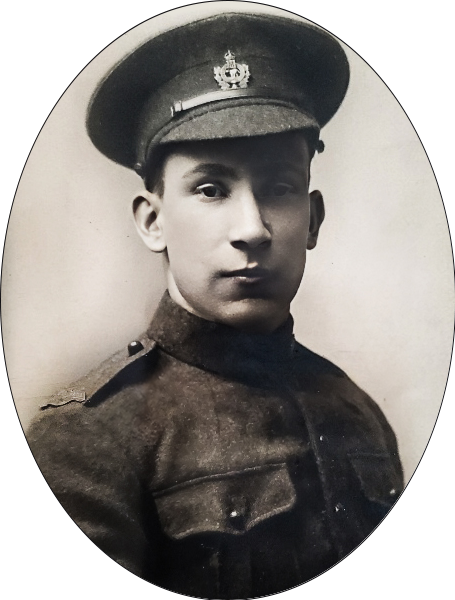
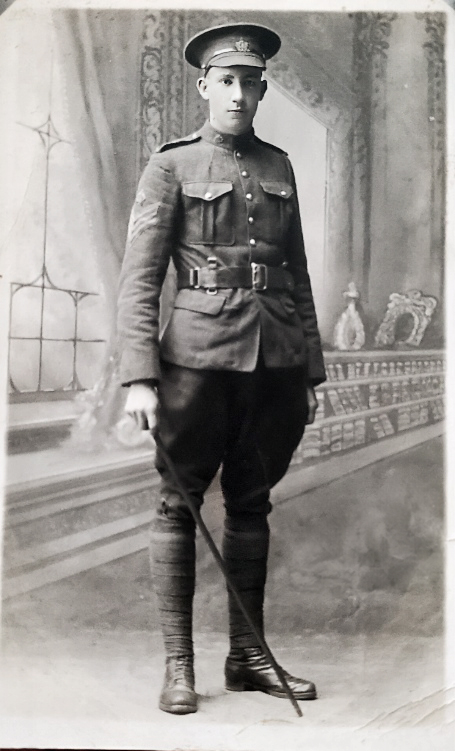
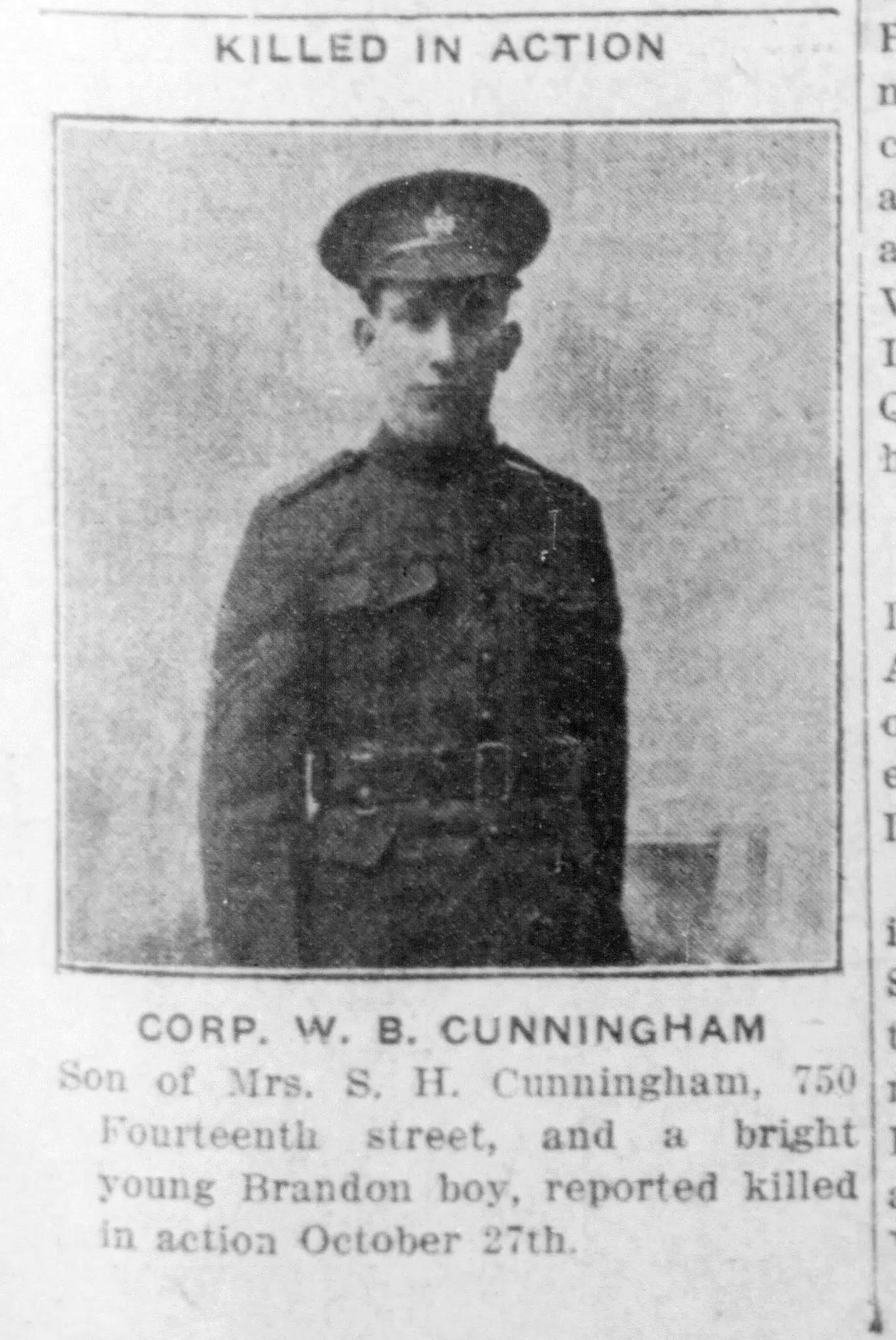
William Benjamin Cunningham
Information about birth
|
Date of birth: 30/12/1895 |
|
Place of birth: Hayfield, Manitoba, Canada |
General information
|
Last known residence: 150 14th Street, Brandon, Manitoba, Canada |
|
Profession: Clerk |
|
Religion: Methodist |
Army information
|
Country: Canada |
|
Force: Canadian Expeditionary Force |
|
Rank: Corporal |
|
Service number: 865074 |
|
Enlistment date: 10/02/1916 |
|
Enlistment place: Brandon, Manitoba, Canada |
|
Units: — Canadian Infantry, 44th Bn. (Manitoba) (Last known unit) |
Information about death
|
Date of death: 27/10/1917 |
|
Place of death: Tiber, Passchendaele, Belgium |
|
Cause of death: Killed in action (K.I.A.) |
|
Age: 21 |
Cemetery
|
Tyne Cot Cemetery Plot: XL Row: D Grave: 18 |
Distinctions and medals 2
|
British War Medal Medal |
|
Victory Medal Medal |
Points of interest 4
| #1 | Place of birth | ||
| #2 | Last known residence | ||
| #3 | Enlistment place | ||
| #4 | Place of death (approximate) |
My story
William Benjamin Cunningham was born in December 1895 in Hayfield, a hamlet amidst the seemingly endless wheat fields of Manitoba, no more than a handful of farms that had nestled around a straight crossroads — as seen only in North America — seeking companionship and shelter from the wind that relentlessly swept across the plains. When the 20-year-old Benjamin enlisted at the beginning of 1916, the family lived in Brandon, the second city of Manitoba, where he worked as a clerk. The war had not left him unaffected. As early as the spring of 1915, shortly after the Canadian Expeditionary Force had suffered heavy losses at Ypres, he had joined the local militia, the 99th Manitoba Rangers. From early July 1917, he served on the Western Front with the 44th Battalion (Manitoba) of the Canadian Infantry, part of the 10th Canadian Brigade within the 4th Canadian Division. In September, he was promoted to corporal.
In the autumn of 1917, the Canadian Corps was chosen to capture the heights around the Flemish village of Passchendaele, east of Ypres. In the first two phases, on 26 and 30 October, the troops had to free themselves from the mud by gaining higher ground. Once the slopes were consolidated, Passchendaele could be taken. The final stretch of the ridge north of Passchendaele had to be captured in a final phase on 10 November.
On 26 October 1917, at first light, the Canadian artillery brachten their deadly load down. While the defenders withdrew to their shelters, the Canadians advanced. The Ravebeek cut through the front; the shallow ditch had been transformed by the many bombardments into a kilometre-wide swamp. The 4th Division operated east of the Ravebeek. Advancing through the marshy valley was almost impossible. The division could only attack with one battalion. Only a narrow strip along the railway and Passchendaele Road proved dry enough. The front of the 46th Battalion (South Saskatchewan) was barely 550 metres wide and dominated by at least ten pillboxes. Both east and west of the Ravebeek, resistance was strong, and losses were severe: the 46th lost 70% of its men. A German counterattack forced them to retreat under heavy machine-gun fire. By evening, the battalion was positioned between Decline Copse near the railway and Passchendaele Road, some 500 metres from their starting point.
On 27 October, the operation continued, and the 44th Battalion was ordered to capture Decline Copse, which had remained in German hands. Under heavy artillery and machine-gun fire, they managed to secure a series of continuous positions from Decline Copse to Passchendaele Road.
Corporal William Benjamin Cunningham, aged 21, fell on 27 October 1917. According to his Circumstances of Casualty card, he was killed “During very intense and severe fighting in the Passchendaele area, Corporal Cunningham was on duty in a forward outpost, when he was shot through the head by an enemy rifle bullet and instantly killed.” He was buried near the ridge, close to a position called Tiber, approximately 500 metres northeast of Decline Copse.
According to the Canadian Commonwealth War Graves Registers, his grave could not be located. In September 1920, his body was interred as an unknown Canadian corporal at Tyne Cot Cemetery. Only a century later, in 2020, research showed that Corporal Cunningham was the only unknown corporal of the 44th Battalion who had fallen in Belgium during the Great War. On 11 September 2025, his grave at Tyne Cot Cemetery, Plot XL, Row D, Grave 18, was rededicated.
Sources 6
|
Cook T., Shock Troops: Canadians fighting the Great War 1917-1918. Volume II, (Toronto, Penguin Canada, 2008), pp. 330. Sources used |
|
Personnel Records of the First World War (Library and Archives Canada, Ottawa (LAC), RG 150, Accession 1992-93/166, Box 2222 - 14). https://library-archives.canada.ca/ Sources used |
|
War diaries: 44th Canadian Infantry Battalion (Library and Archives Canada, Ottawa (LAC), RG9-III-D-3, Volume number: 4939, Microfilm reel number: T-10745, File number: 435). https://library-archives.canada.ca/ Sources used |
|
War diaries: 46th Canadian Infantry Battalion (Library and Archives Canada, Ottawa (LAC), RG9-III-D-3, Volume number: 4939, Microfilm reel number: T-10745, T-10745--T-10746, File number: 437) https://library-archives.canada.ca/ Sources used |
|
War Graves Registers: Circumstances of Death (Library and Archives Canada, Ottawa (LAC), RG 150, 1992-93/314; Volume Number: 169). https://library-archives.canada.ca/ Sources used |
|
War Graves Registry: Commonwealth War Graves (Library and Archives Canada, Ottawa (LAC): RG150, 1992-1993/314, Box 39-244; Box: 60). https://library-archives.canada.ca/ Sources used |
More information 4
|
The Canadian Virtual War Memorial https://www.veterans.gc.ca/en/remembrance/memorials/canadian-virtual-war-memorial/detail/923174 |
|
Commonwealth War Graves Commission Database https://www.cwgc.org/find-records/find-war-dead/casualty-details/923174 |
|
Namenlijst (In Flanders Fields Museum) https://namenlijst.org/publicsearch/#/person/_id=744aea62-d715-4299-9f97-bfc0099c34be |
|
Lives of the First World War (Imperial War Museum) https://livesofthefirstworldwar.iwm.org.uk/lifestory/5606191 |