Pte
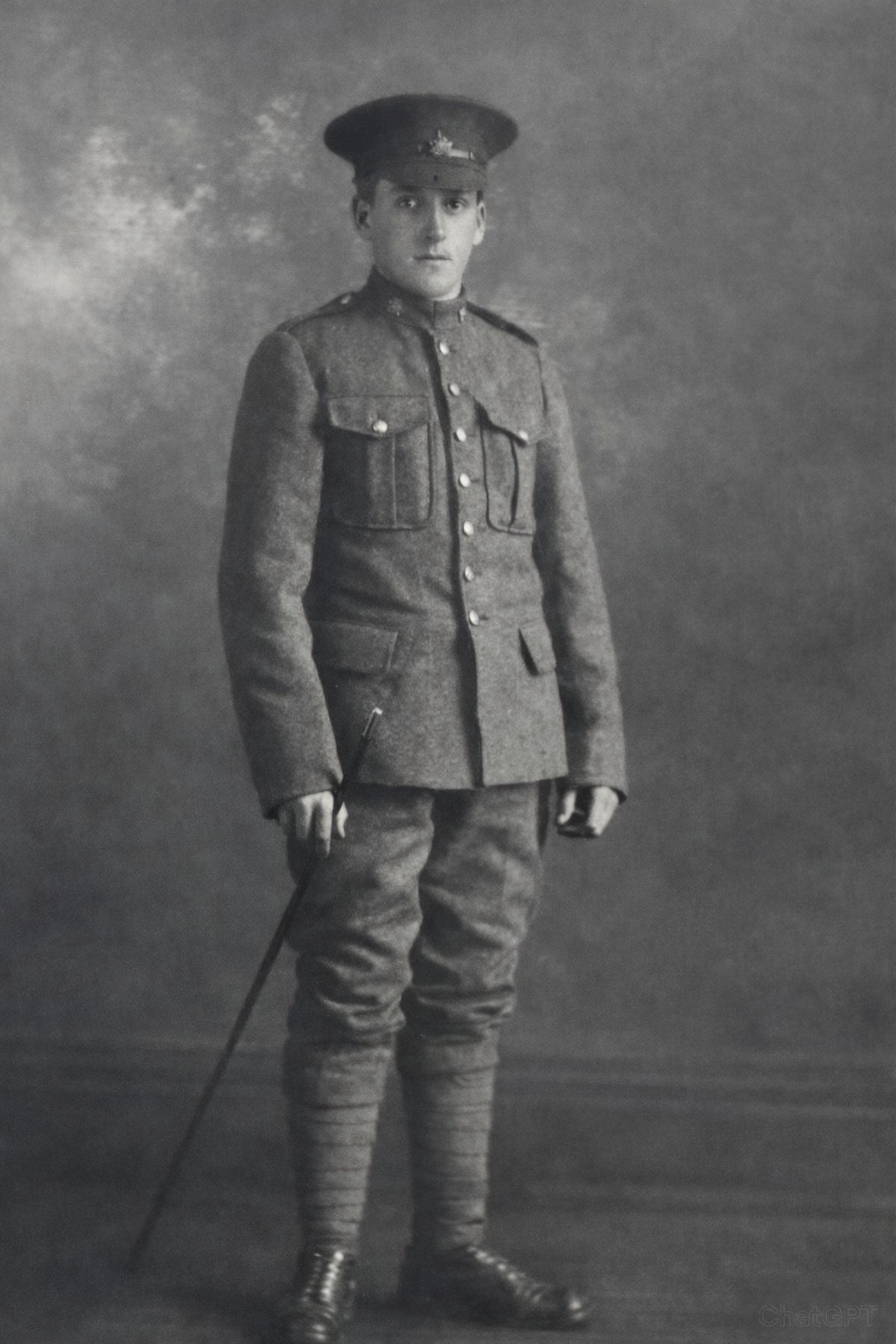
Thomas Lyon Ovington Mellor
Information about birth
|
Date of birth: 01/01/1894 |
|
Place of birth: Eccles, Lancashire, England, United Kingdom |
General information
|
Last known residence: Gardenhead, Saskatchewan, Canada |
|
Profession: Farmer |
|
Religion: Church of England |
Army information
|
Country: Canada |
|
Force: Canadian Expeditionary Force |
|
Rank: Private |
|
Service number: 1009574 |
|
Enlistment date: 18/03/1916 |
|
Enlistment place: Gull Lake, Saskatchewan, Canada |
Information about death
|
Date of death: 26/10/1917 |
|
Place of death: Hillside Farm, Keerselaarhoek, Belgium |
|
Cause of death: Killed in action (K.I.A.) |
|
Age: 23 |
Cemetery
|
Tyne Cot Cemetery Plot: Unknown Row: Unknown Grave: Special Memorial 32 |
Points of interest 5
| #1 | Place of birth | ||
| #2 | Last known residence | ||
| #3 | Enlistment place | ||
| #4 | Place of death (approximate) | ||
| #5 | Cemetery |
My story
Thomas Lyon Ovington Mellor, son of William George Sr. and Harriet Tomlinson, was born on 1 January 1895 in Barton-upon-Irwell, a suburb of Eccles, Lancashire, England. He had two brothers and two sisters, and was the second youngest child. At barely 14 years of age, he and his family emigrated to Canada.
After two unsuccessful applications for free land under the Homestead Act in 1908 and 1909, the Mellor family finally settled in Garden Head, Saskatchewan, where they started a farm. It was his mother Harriet, together with the older children, who managed the farm. Thomas’ father remained something of a mystery, appearing in various locations across Canada.
In March 1916, 21-year-old Thomas traveled to the nearby village of Gull Lake to enlist in the army. Although he had been born in 1895, his attestation papers record 1894 as his year of birth. This must have been a misunderstanding, as Thomas was old enough to enlist and had no need to lie about his age. He was deemed fit by the medical officer, though “dental attention” was noted in his file. In the early days of the war, poor dental health could be grounds for rejection. Rejected recruits sometimes joked ironically: “We will shoot the Germans, not bite them.” As the war went on, however, medical standards became less strict.
Thomas enlisted with the 229th Battalion, a Moose Jaw–based unit recruiting in southern Saskatchewan and training at Camp Hughes near Winnipeg, Manitoba. In April 1917, nearly a year after his enlistment, the 229th sailed for England, where the battalion was absorbed into the 19th Reserve Battalion. After five months of additional training, Thomas was sent to France in September 1917 to serve with the 46th Battalion. He joined them in the Staples region on 18 October, just as the unit was preparing for action in the Ypres sector in Belgium.
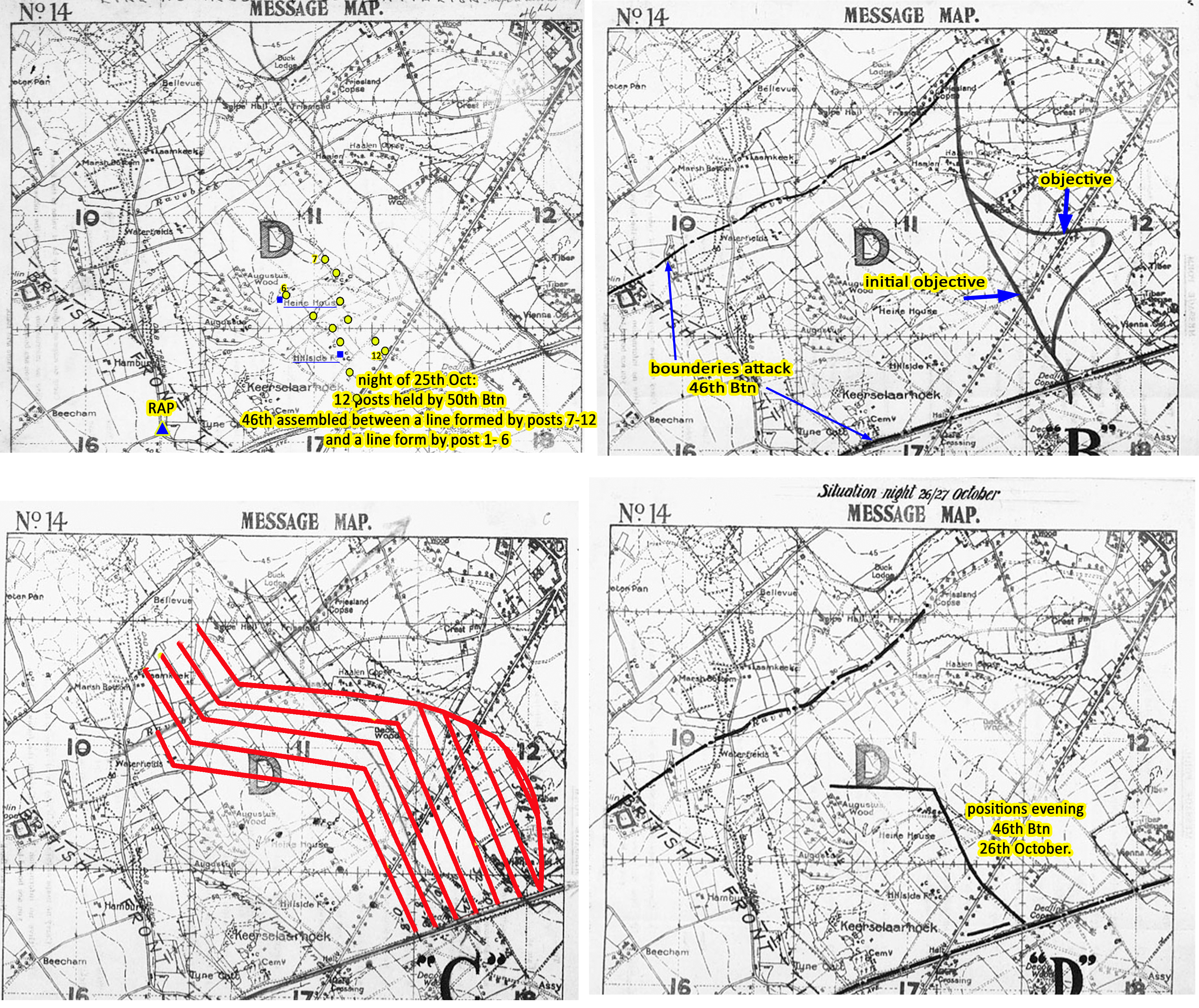
On 21 October 1917, the Canadian 10th Infantry Brigade (including the 46th Battalion) arrived in the Ypres front area. On the 22nd, the brigade took over the front line south of Passchendaele, with the 50th Battalion in the front line and the 46th Battalion directly behind it in support. While waiting for the attack (scheduled for the 26th), the men took shelter in shell holes, with their groundsheets as their only protection. Rain and cold made conditions particularly harsh. German shelling caused heavy casualties. In preparation for the attack, on the evening of the 25th, the 46th Battalion moved to positions in the front line near Heine House and Hillside Farm.
The artillery bombardment began at 5.40 a.m., but fell short, causing many casualties among their own ranks even before the troops could advance. During the attack, the 46th Battalion suffered heavy losses from both friendly and German artillery fire, as well as intense German machine gun fire. With the support of the 50th Battalion, all objectives were captured and reinforced before noon.
Around 4 p.m., the enemy launched a heavy artillery bombardment on the lines and launched several counterattacks. Due to the high number of casualties, the weak defensive line and the lack of artillery support, the 46th Battalion withdrew towards Zonnebeke, mainly using the Zonnebeke-Passendale road. After some regrouping, the battalion held its ground in a line close to the positions from which they had departed that morning.
In the evening, the 46th Battalion was relieved and withdrew to Levis Corner, near the center of Zonnebeke. The Germans fired gas grenades and other ammunition at that area, resulting in further casualties.
According to the report by Lt. Col. Dawson, who commanded the 46th, the battalion suffered 402 casualties (53 killed, 287 wounded, 62 missing), which amounts to 70%. The website CWGC.org lists 98 men from the 46th who were killed on 26 October, 75 of whom are commemorated on the Ypres (Menin Gate) Memorial and 11 buried at Tyne Cot Cemetery. Within days of the attack, another 16 men from the 46th Battalion died of their wounds in field hospitals. The very high losses during this and other operations in the First World War earned the battalion the nickname “The Suicide Battalion”.
Private Mellor’s service file records that he was initially reported missing during the attack of 26 October 1917. Shortly afterward, however, he was confirmed killed in action. He was initially buried near Hillside House, in grave A.2 (map reference 28.D.11.d.00.20). This is only a short distance away from the 46th Battalion’s jump-off positions on the morning of 26 October.
Yet this information does not fully align with the account given in Mellor’s Circumstances of Death record. There it is written that Pte Mellor: “Took part with his battalion in an attack south of Passchendaele, and on reaching the objective he was killed.” The same document lists his burial place as Hill Side Farm, 28.D.11.d.00.20—again corresponding to the jump-off position rather than the stated objective.
According to the CWGC files Private Mellor is believed to have been reburied at Tyne Cot Cemetery in a unknown grave. A special memorial headstone (no. 32), inscribed with his name and the phrase “Believed to be buried in this cemetery”, was erected along the western cemetery wall near the entrance and gatehouse on Tynecotstraat.
Sources 3
|
Circumstance of Death (Library and Archives Canada, Ottawa (LAC), RG150, 1992-93/314, 212) https://library-archives.canada.ca/ Sources used |
|
Commonwealth War Graves Registers, First World War (Library and Archives Canada, Ottawa (LAC), RG150, 1992-93/314, 94) https://library-archives.canada.ca/ Sources used |
|
Personnel Records of the First World War (Library and Archives Canada, Ottawa (LAC), RG 150, Accession 1992-93/166, Box 6108 - 50) https://library-archives.canada.ca/ Sources used |
More information 5
|
Namenlijst (In Flanders Fields Museum) https://namenlijst.org/publicsearch/#/person/_id=24d44409-8a82-4b6f-8737-a0a9d53cbea9 |
|
Lives of the First World War (Imperial War Museum) https://livesofthefirstworldwar.iwm.org.uk/lifestory/5671034 |
|
The Canadian Virtual War Memorial https://www.veterans.gc.ca/en/remembrance/memorials/canadian-virtual-war-memorial/detail/463936 |
|
Commonwealth War Graves Commission Database https://www.cwgc.org/find-records/find-war-dead/casualty-details/463936 |
|
A Street Near You https://astreetnearyou.org/person/463936/ |