Cpl
Horace Pickford
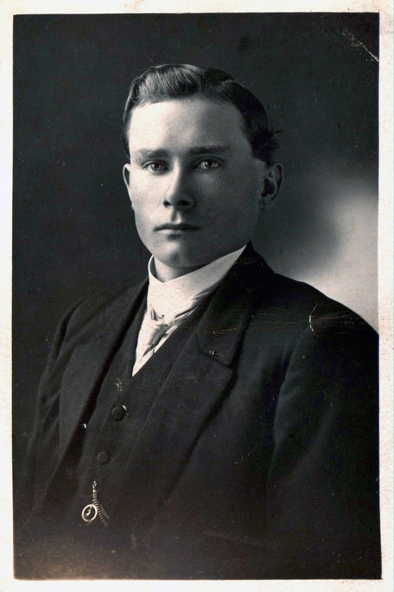
Information about birth
|
Date of birth: 25/06/1890 |
|
Place of birth: Clunes, Victoria, Australia |
General information
|
Last known residence: Clunes, Victoria, Australia |
|
Profession: Farmer |
|
Religion: Methodist |
Army information
|
Country: Australia |
|
Force: Australian Imperial Force |
|
Rank: Corporal |
|
Service number: 2882 |
|
Enlistment date: 22/06/1915 |
|
Enlistment place: Melbourne, Victoria, Australia |
|
Units: — Australian Infantry, 58th Bn. |
Information about death
|
Date of death: 27/09/1917 |
|
Place of death: Black Watch Corner, Zonnebeke, Belgium |
|
Cause of death: Killed in action (K.I.A.) |
|
Age: 27 |
Cemetery
|
Tyne Cot Cemetery Plot: LXII Row: E Grave: 2 |
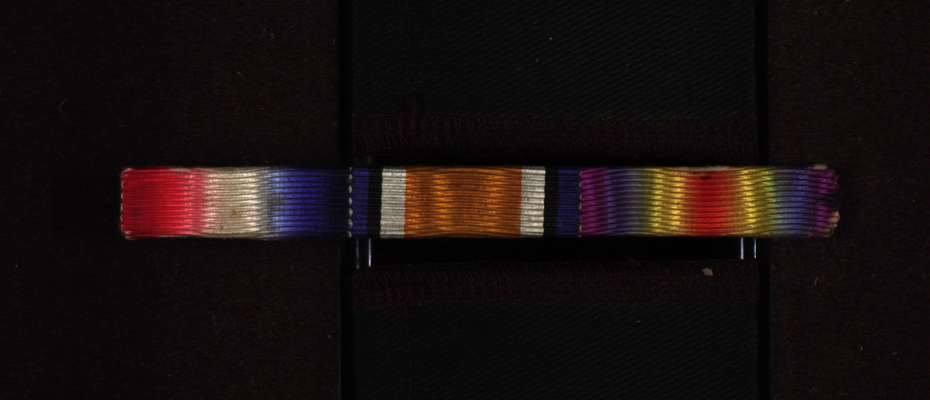
Distinctions and medals 4
|
1914-15 Star Medal |
|
British War Medal Medal |
|
Distinguished Conduct Medal Medal |
|
Victory Medal Medal |
Points of interest 4
| #1 | Place of birth | ||
| #2 | Last known residence | ||
| #3 | Enlistment place | ||
| #4 | Place of death (approximate) |
My story
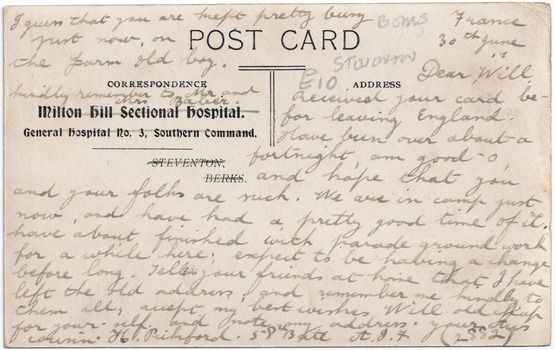
Horace Pickford was the son of Bessie and John Pickford. He was born around 1890 in Clunes, Victoria. Before the war he lived with his wife Ida Harvey in his hometown, where he worked as a farmer on Yeovil Farm, his family’s estate. At the age of 25, Horace enlisted in Melbourne to serve in the Australian Army. He served in the 58th Australian Infantry Battalion (15th Brigade, 5th Australian Division).
Before his time in Flanders, Horace was awarded the Distinguished Conduct Medal for his actions in France, on the recommendation of Brigadier General Harold Elliott. He described how Horace was struck by a shell on 30 November 1916 near Montauban, at the Somme. Despite his wounds, he volunteered to guide the 56th Battalion safely to the front line. During this action, no casualties were sustained.
Horace was killed on 27 September 1917 during the Battle of Polygon Wood, part of the Battle of Passchendaele. As early as 23 September, his division had been deployed along the western edge of Polygon Wood, located southwest of nearby Zonnebeke. Two days later, the battalion repelled a German attack and assisted the British 33rd Division on their right flank by launching a counterattack that pushed back German forces.
The following day, 26 September, a new Allied attack took place. The 5th Australian Division was tasked with reaching the eastern edge of Polygon Wood and thus capturing the entire forest. While Horace’s battalion played a supporting role, the assault was led by the 59th, 29th and 31st Battalions. The operation began at 5:50 a.m. and encountered heavy resistance from Cameron House on the right flank, causing the advance to stall temporarily around 7:30 a.m. Around 11 a.m., they were reinforced by the British 33rd Division, allowing the first objective to be reached by midday, after which fighting continued towards the second objective, a front line several hundred metres further east. Around noon, the Australians were subjected to intermittent bombardment, followed by a counterattack at approximately 6:15 p.m. on the right flank. This was repelled by artillery and machine-gun fire. The operation achieved its objective, but proved to be a costly victory for the 58th Battalion, which lost half of its men during the battle.
On 27 September, the 58th Battalion was deployed as a garrison on the former Allied front line, located on the western edge of Polygon Wood. There, they had the opportunity to reorganise and evacuate the wounded. In the afternoon, their positions were heavily bombarded, followed by a counterattack on the right flank, defended by the British 33rd Division. This attack was once again repelled with the help of machine-gun fire from the 15th Brigade, although the German bombardments caused many casualties. In the evening, they were finally relieved by the Australian 8th Battalion and moved to the so-called Chateau Segard, a military camp near Ypres.
While his battalion was waiting to be relieved, Horace died on 27 September near Black Watch Corner, which marked the southwestern boundary of Polygon Wood. Only a month earlier, he had been promoted to corporal. In his paybook, he left his personal belongings to his wife, Ida. After the war, his body was recovered near Black Watch Corner. His remains were subsequently reburied at Tyne Cot Cemetery, where he found his final resting place.
Sources 5
|
First Australian Imperial Force Personnel Dossiers, 1914-1920 (National Archives of Australia, Canberra (NAA), B2455, PICKFORD H). https://recordsearch.naa.gov.au/ Sources used |
|
Honours and Awards Recommendation (Australian War Memorial, Campbell (AWM), RCDIG1068364). https://www.awm.gov.au/ Sources used |
|
McCarthy, Chris. Passchendaele: The Day by Day Account (Londen: Arms & Armour Press, 2018), 94-5. Sources used |
|
Trove (National Library of Australia (NLA) & partner organisations) https://trove.nla.gov.au/ Sources used |
|
Unit embarkation nominal rolls, 1914-18 War (Australian War Memorial, Campbell (AWM), AWM8). https://www.awm.gov.au/ Sources used |
More information 3
|
Lives of the First World War (Imperial War Museum) https://livesofthefirstworldwar.iwm.org.uk/lifestory/7550182 |
|
Commonwealth War Graves Commission Database https://www.cwgc.org/find-records/find-war-dead/casualty-details/464288 |
|
The AIF Project (UNSW Canberra) https://aif.adfa.edu.au/showPerson?pid=241139 |