2nd Lt
Hugh Cecil McCrostie

Information about birth
|
Date of birth: 09/01/1897 |
|
Place of birth: Edinburgh, Midlothian, Scotland, United Kingdom |
General information
|
Last known residence: 27B Greenhill Gardens, Edinburgh, Midlothian, Scotland, United Kingdom |
|
Profession: Chartered accountant |
Army information
|
Country: Scotland, United Kingdom |
|
Force: British Expeditionary Force |
|
Rank: Second Lieutenant |
|
Units: — Tank Corps, A Bn. (Last known unit) |
Information about death
|
Date of death: 26/12/1970 |
|
Place of death: Edinburgh, Midlothian, Scotland, United Kingdom |
|
Cause of death: Death post-war (unrelated) |
|
Age: 73 |
Distinctions and medals 3
|
British War Medal Medal |
|
Distinguished Service Order (DSO) Medal |
|
Victory Medal Medal |
Points of interest 5
| #1 | Place of birth | ||
| #2 | Last known residence | ||
| #3 | Wrecksite | ||
| #4 | Place of wounding | ||
| #5 | Place of death (approximate) |
My story
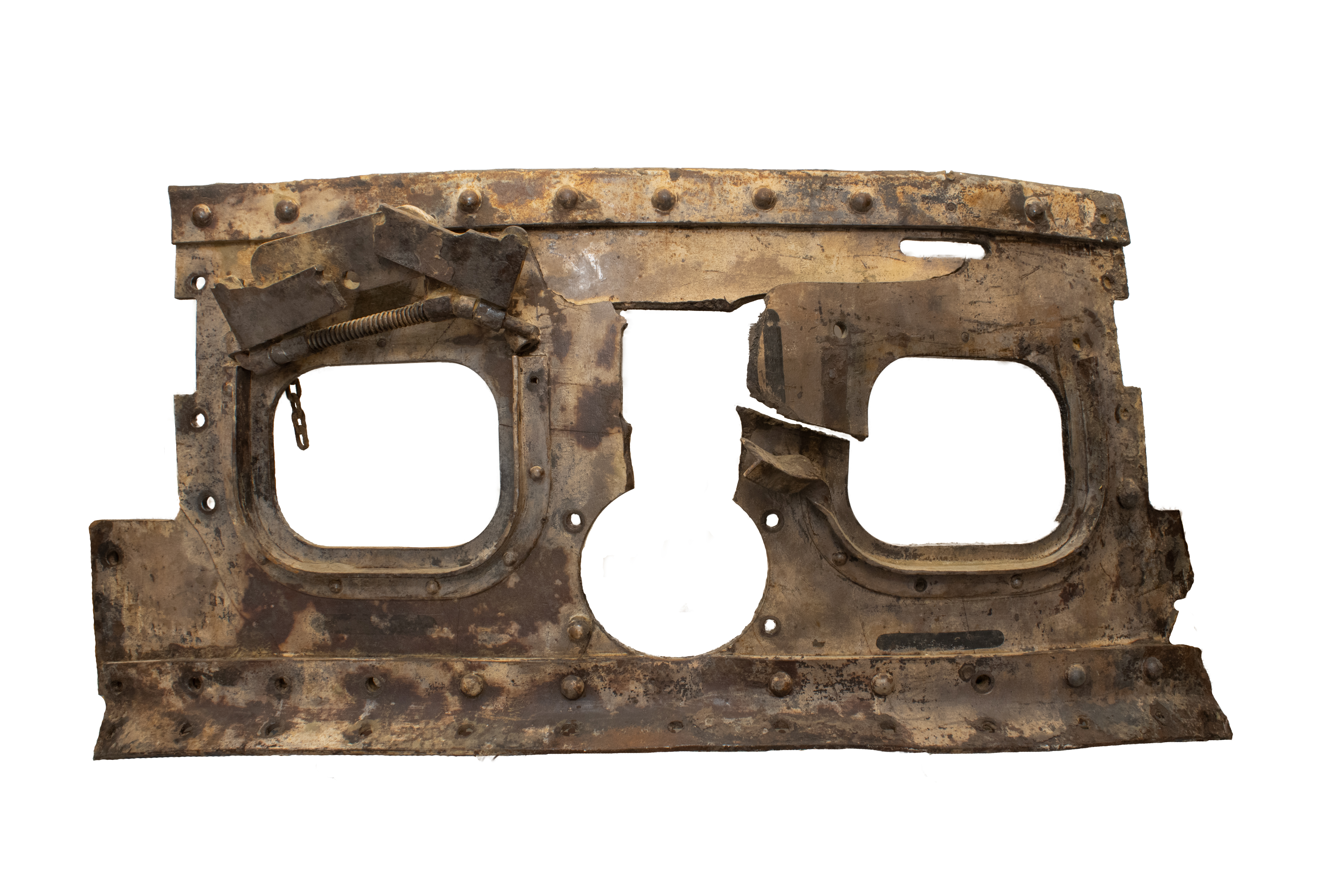
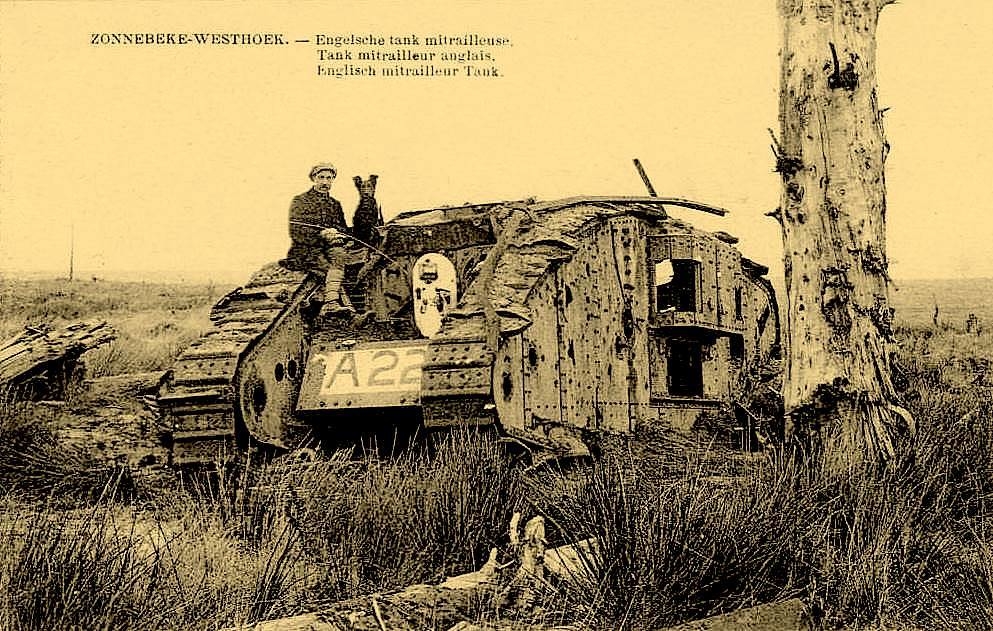
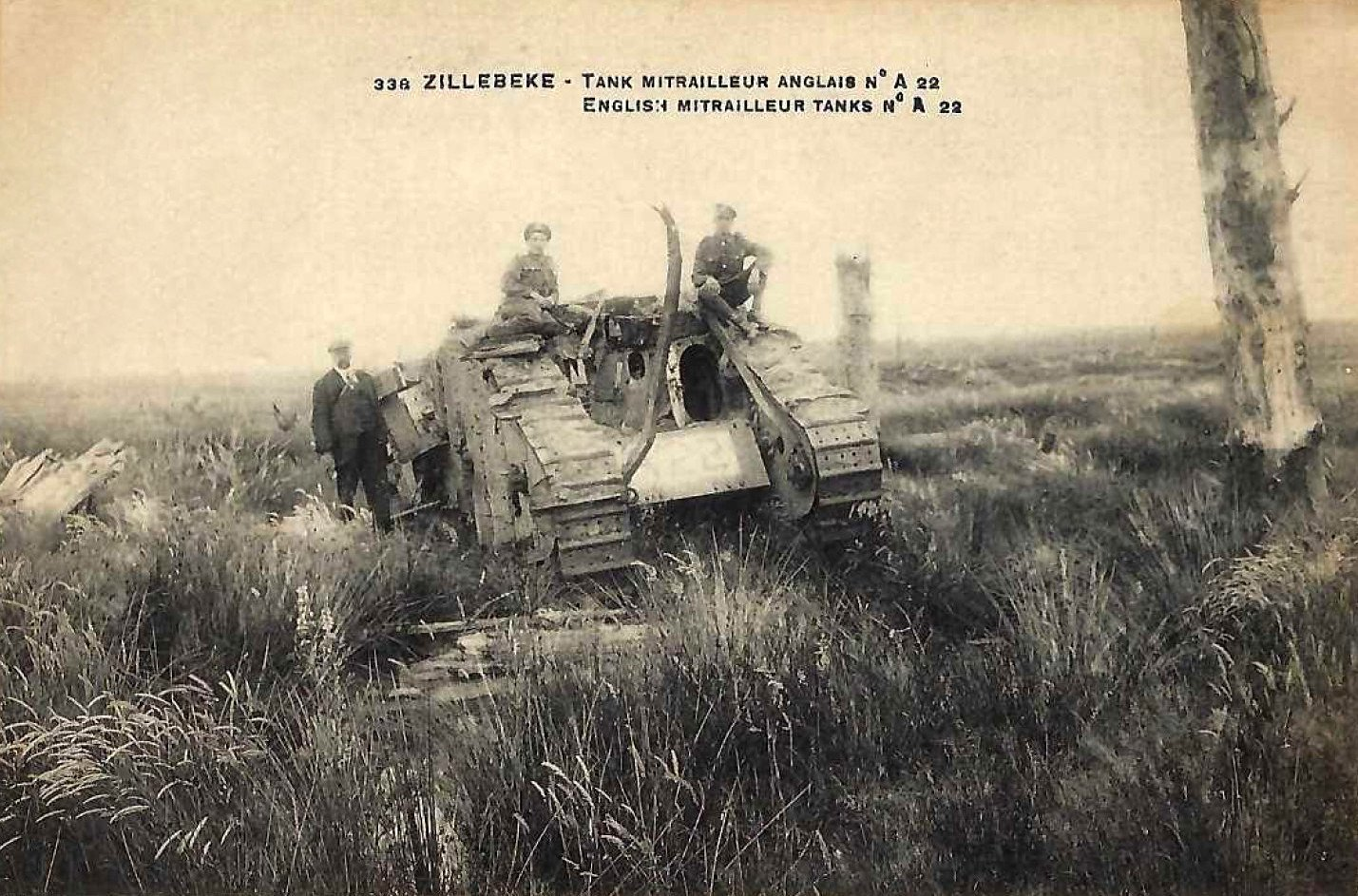
In the Passchendaele Museum is displayed an almost intact frontal plate of a British Mark IV tank. In the summer of 2017, archaeologists came across this unexpected archaeological find, at the very spot where, on the opening day of the Third Battle of Ypres, on 31 July 1917, Auld Reekie, tank A22, was disabled.
Auld Reekie, tank A22, belonged to A Battalion, the first battalion of the Tank Corps. The tank was commanded by the barely twenty‑year‑old Second Lieutenant Hugh Cecil McCrostie, born in January 1897 in Edinburgh, Scotland. He was the fourth child of Agnes and Hugh McCrostie, a commercial traveller.
Hugh had served on the Western Front since June 1916, first with the 17th Battalion Royal Scots and later with the Tank Corps. His brother Charles, ten years his senior and a Second Lieutenant with the 15th Highland Light Infantry, was killed on the first day of the Somme, at Authuille.
On 31 July 1917, the tanks of A Battalion supported the attack of the 8th Division between the Ypres–Roeselare railway line and the Menin Road, towards the heights near Broodseinde. The condition of the ground was abominable. Heavy artillery had torn apart the terrain between the German front line and the Albrecht‑Stellung. Combined with persistent rain and disrupted drainage, entire areas were flooded, forming an almost insurmountable obstacle for the infantry, and certainly for the heavy tanks.
Auld Reekie, named after a nickname for the Scottish capital, advanced in tandem with her male partner Andromeda (A21) from Hooge towards Glencorse Wood. Skittish and sluggish, yet dutifully driven forward by the familiar hand of the farmer, like cattle led to the slaughter. At the junction of the castle drive and the Frezenbergstraat, Andromeda briefly came into action before a direct hit set the tank ablaze.
With machine guns rattling, Auld Reekie moved to the very edge of Glencorse Wood. At the second trench line of what the British called Jabber Trench, part of the Albrecht‑Stellung between Glencorse Wood and Westhoek, A22 was hit twice before coming to a definitive halt. Second Lieutenant McCrostie was wounded in the process.
McCrostie survived the war, although he remained in service for some time afterwards. In February 1920 he was awarded the Distinguished Service Order for his contribution to military operations in Finland and the Baltic States. In 1934 he became engaged to Doris Harcourt. At that time he was working as a company auditor. The couple settled in a residential suburb of Edinburgh, where Hugh Cecil McCrostie would die in 1970.
What remains today is a tank plate excavated in the summer of 2017 and now exhibited in the Passchendaele Museum. Absolute certainty will probably never be achieved, but the hypothesis is strong, especially since A22 and A21 were the only tanks within a radius of five hundred metres of the find spot. The fact that the plate is exceptionally well preserved and still shows clear traces of the original paintwork is significant in this respect: Andromeda (A21), the closest other tank, burned out completely on 31 July 1917. Whatever the case, the tank plate stands as a silent witness to the destruction of the tanks at Passchendaele, where hubris and horror went hand in hand.
Sources 10
|
1 Battalion Tank Corps (The National Archives, KEW (TNA), WO 95/109/3). https://www.nationalarchives.gov.uk/ Sources used |
|
1901 Scotland Census (National Records of Scotland, Edinburgh (NRS), Reels 1-446). https://www.gov.uk/general-register-office Sources used |
|
British Army World War I Medal Rolls Index Cards, 1914-1920 (The National Archives, Kew (TNA), WO372). https://www.nationalarchives.gov.uk/ Sources used |
|
Cooper B., Tank Battles of World War I (Pen & Sword, Barnsley, 2014). Sources used |
|
Headquarters Tank Corps (The National Archives, KEW (TNA), WO 95/91/6). https://www.nationalarchives.gov.uk/ Sources used |
|
Headquarters Tank Corps (The National Archives, KEW (TNA), WO 95/92/2). https://www.nationalarchives.gov.uk/ Sources used |
|
Hoven E., Verleysen A., en Janssens D., Zonnebeke-Frezenberg archeologisch onderzoek Aquafin-collector ADEDE Archeologisch Rapport 261 (ADEDE, Gent, 2018). Sources used |
|
Local News (Cheshire, Cheshire Observer, 17/02/1934). Sources used |
|
Mitchell F., Tank Warfare: The Story of the Tanks in the Great War (Spa Books, Stevenage, 1987). Sources used |
|
Shipping and Seamen Rolls of Honour WWI and WWII (The National Archives, Kew (TNA), BT 339). https://www.nationalarchives.gov.uk/ Sources used |