Musk.
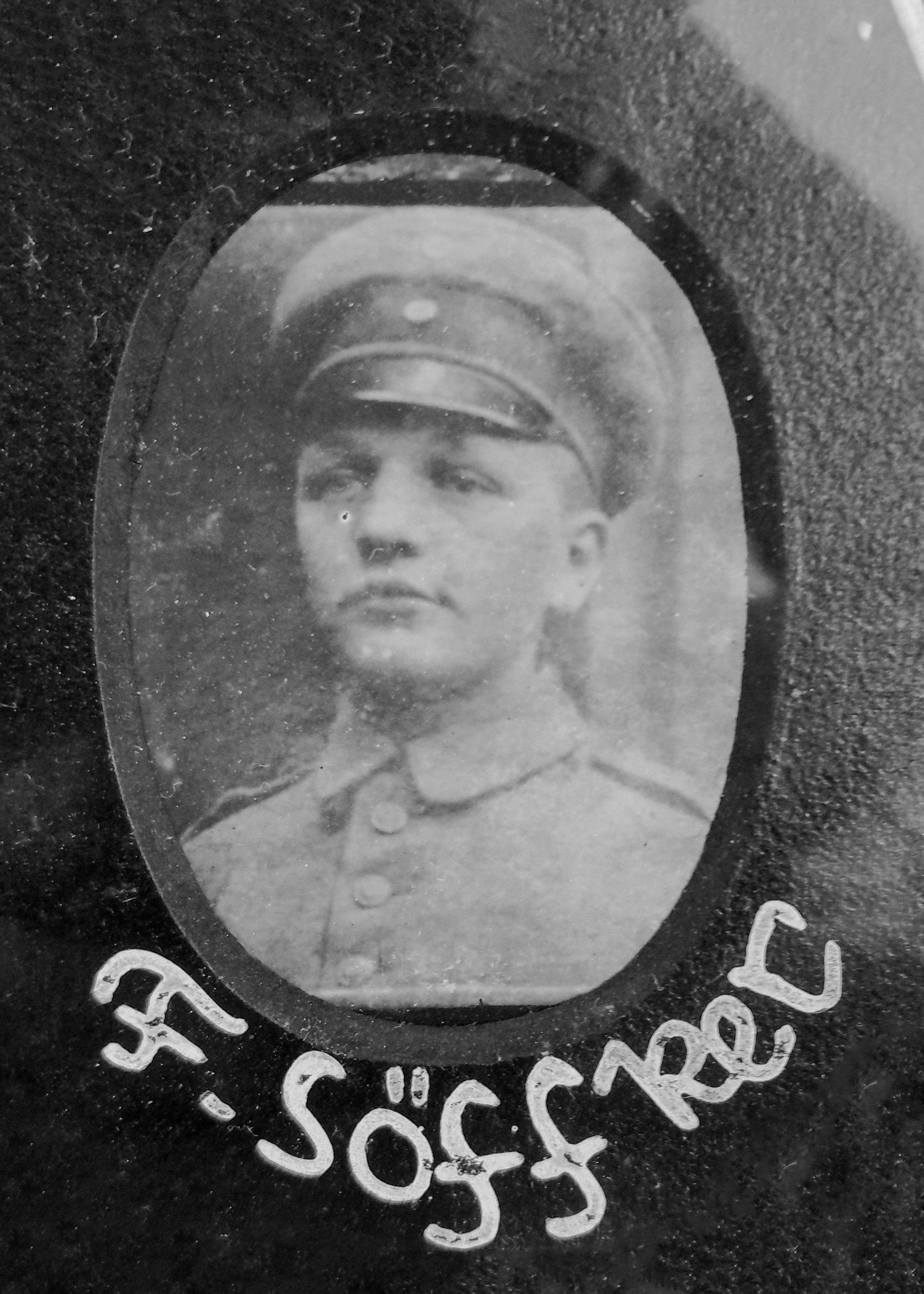
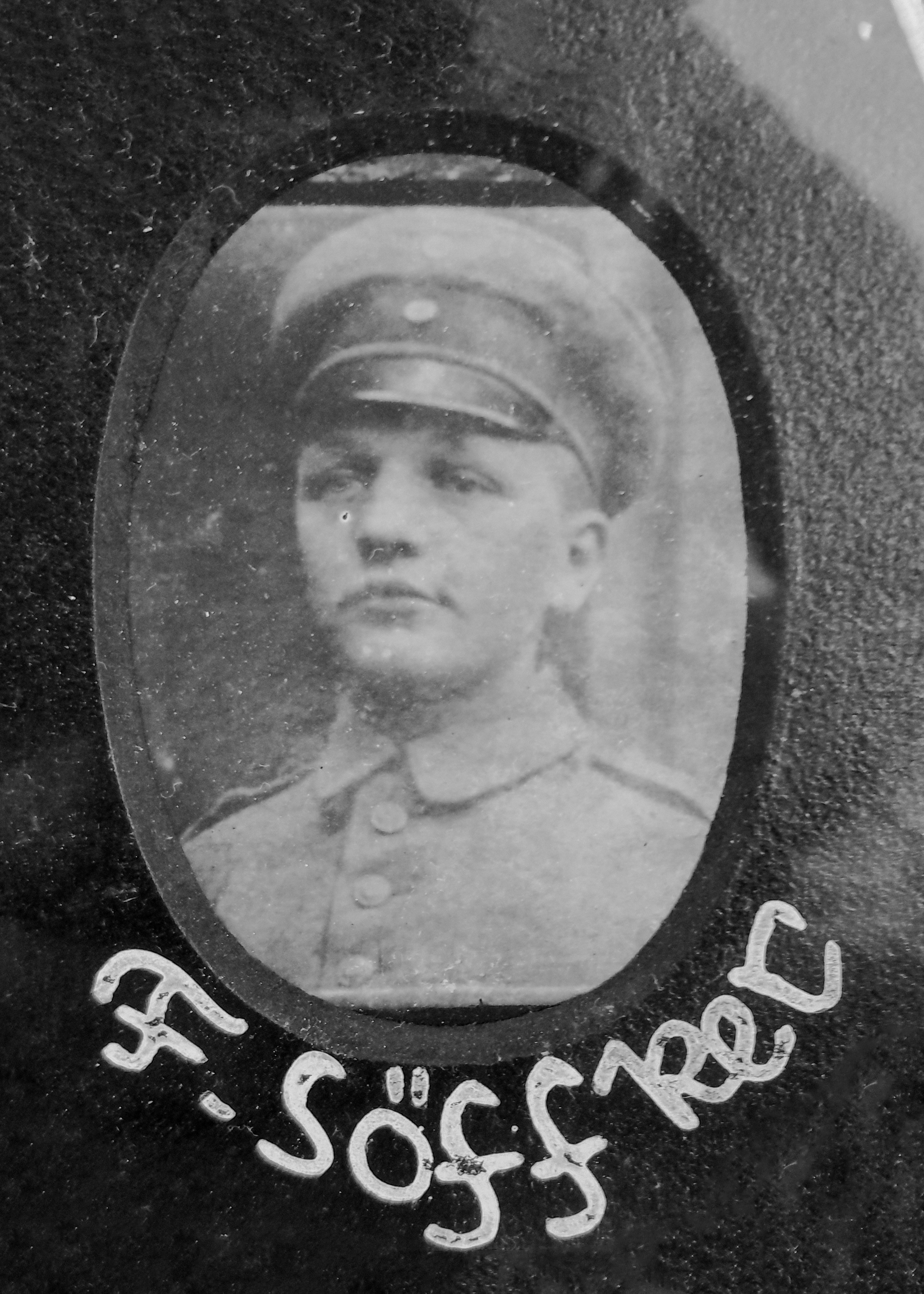
Friedrich Ludwig Söffker
Information about birth
|
Date of birth: 17/09/1896 |
|
Place of birth: Hohenrode, Grafschaft Schaumburg, Hessen-Nassau, Kingdom of Prussia, German Empire |
General information
|
Religion: Lutheran |
Army information
|
Country: Kingdom of Prussia, German Empire |
|
Force: Imperial German Army |
|
Rank: Musketier |
|
Units: — 5. Kompagnie, II. Bataillon, Reserve-Infanterie-Regiment 229 (Last known unit) |
Information about death
|
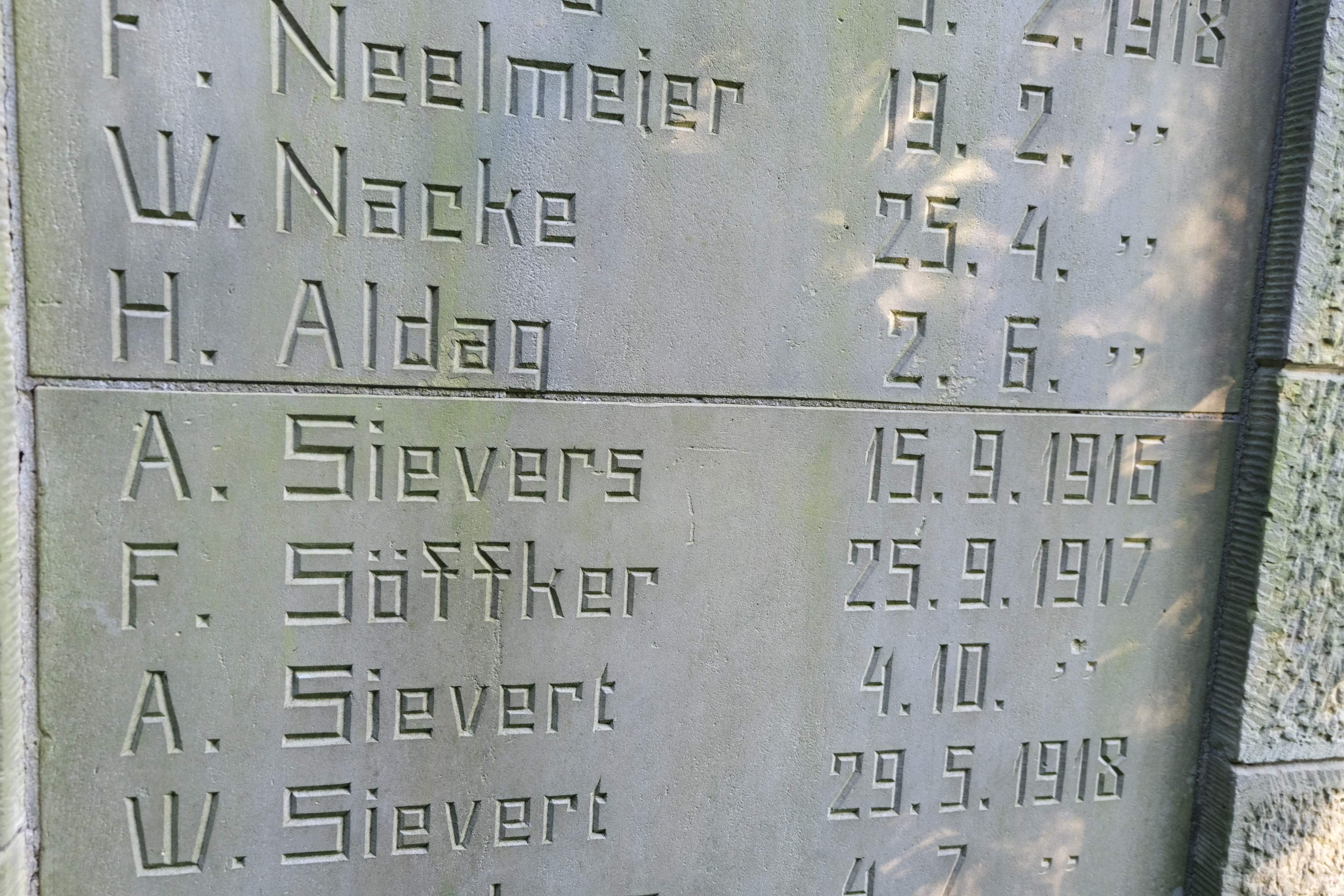
Date of death: 25/09/1917 |
|
Place of death: Polygon Wood, Zonnebeke, Belgium |
|
Age: 21 |
Cemetery
|
Deutscher Soldatenfriedhof Langemark (Kameradengrab) Plot: Unknown Row: Unknown Grave: Unknown |
Points of interest 2
| #1 | Place of birth | ||
| #2 | Place of death (approximate) |
My story
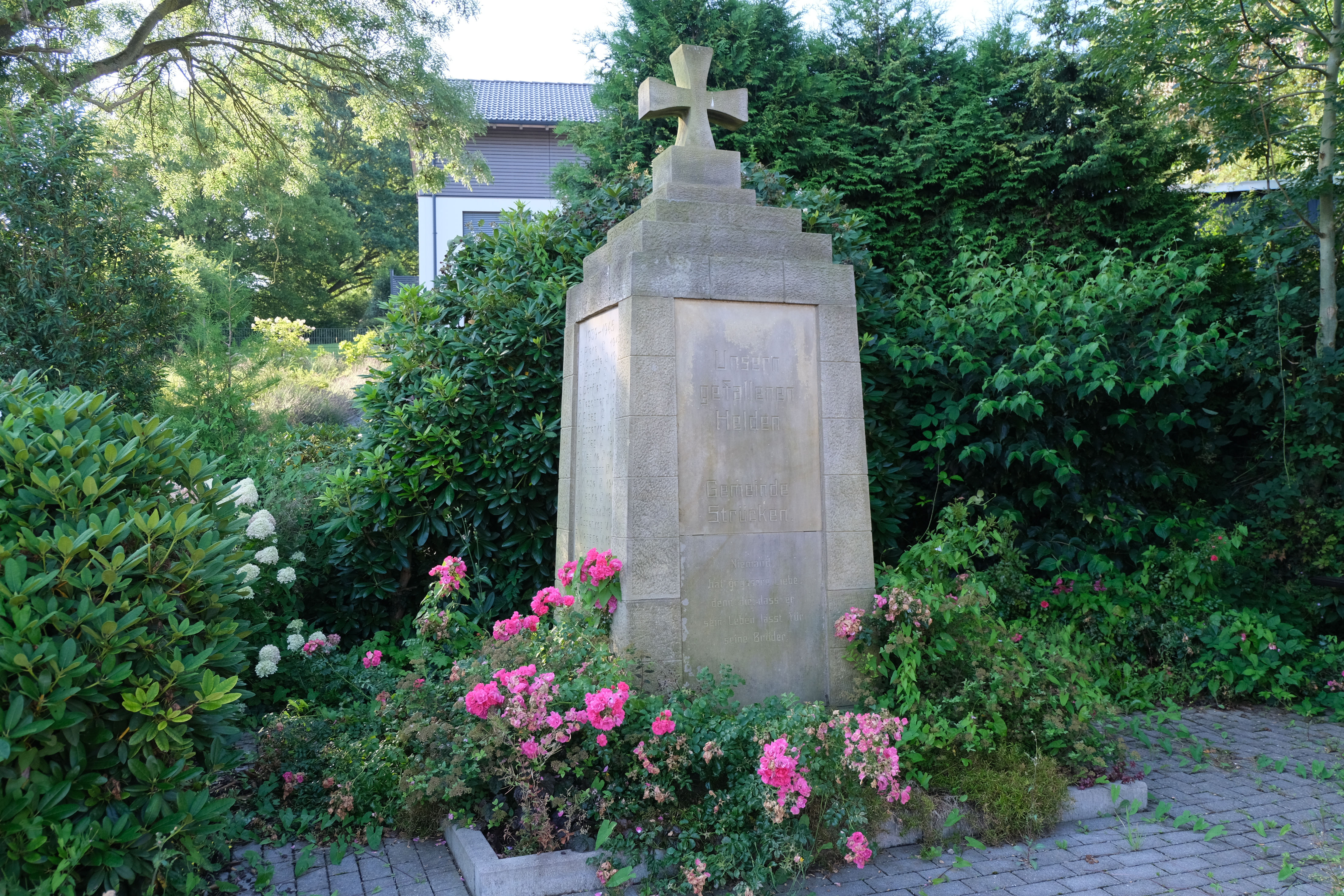
Friedrich Ludwig Söffker was born on 17 September 1896 in Hohenrode (Rinteln) as the illegitimate son of Karoline Söffker.
Friedrich was mobilized and served with the 5. Kompagnie of Reserve-Infanterie-Regiment 229. From 22 September 1917 onwards, the regiment was deployed in Polygon Wood and the area to its south, as far as the Reutelbeek stream. On 25 September 1917, the Germans launched a large-scale counterattack there. From that day on, Friedrich Ludwig was listed as missing in action.
After the war, Friedrich’s mother tried to obtain more information about her son’s fate. It was not until the 1980s that his story finally became clear. During work carried out in Polygon Wood in 1986 or 1987, human remains were discovered by, among others, Patrick Van Wanzeele. Examination of an identification tag revealed that the remains belonged to Friedrich Söffker. A German journalist even succeeded in making contact with Friedrich’s half-sister.
The remains of Friedrich Söffker were subsequently most likely reinterred in the Kameradengrab at Langemark. However, his name was never recorded in any way by the Volksbund Deutsche Kriegsgräberfürsorge (German War Graves Commission).
Sources 5
|
"Verlustlisten Erster Weltkrieg", Verein für Computergenealogie (DES) https://wiki.genealogy.net/Verlustlisten_Erster_Weltkrieg/Projekt Sources used |
|
"Verlustlisten Erster Weltkrieg/Vermisstenliste", Verein für Computergenealogie (DES) https://wiki.genealogy.net/Verlustlisten_Erster_Weltkrieg/Vermisstenliste Sources used |
|
Alfons Wiedersich. Das Reserve-Infanterie-Regiment Nr. 229. Erinnerungsblätter Preußen Bd. 316 (Verlag Tradition Wilhelm Kolk, Berlin, 1929). Sources used |
|
Kris Hendrickx, "'Diggers' graven al twee decennia in de Westhoek," De Morgen, 12.11.2004. Sources used |
|
Matthias Declercq, "Wat zit er in godsnaam allemaal in de West-Vlaamse grond?" De Morgen, 03.08.2010. Sources used |
More information 1
|
Namenlijst (In Flanders Fields Museum) https://namenlijst.org/publicsearch/#/person/_id=fa4e15cc-0648-4df9-9a67-e4f94f90c24d |