Pte
Tom Dale
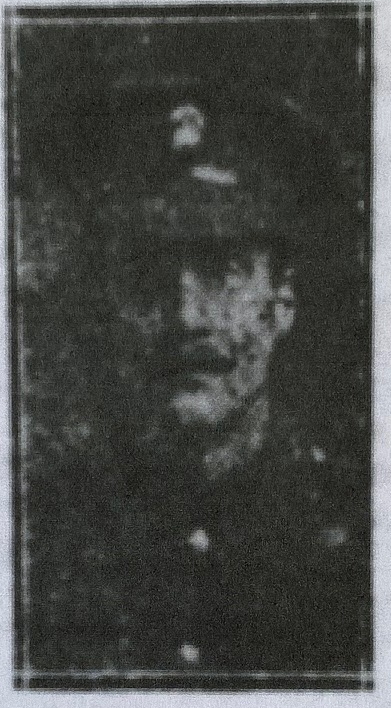
Information about birth
|
Year of birth: 1885 |
|
Place of birth: Newcastle upon Tyne, Northumberland, England, United Kingdom |
General information
|
Last known residence: 30 Cuthbert Street, Blaydon, Durham, England, United Kingdom |
|
Profession: Railway Shunter |
Army information
|
Country: England, United Kingdom |
|
Force: British Expeditionary Force |
|
Rank: Private |
|
Service number: 204630 |
|
Units: — Northumberland Fusiliers, 1/4th Bn. (Last known unit) |
Information about death
|
Date of death: 26/10/1917 |
|
Place of death: Turenne Crossing, Belgium |
|
Cause of death: Killed in action (K.I.A.) |
|
Age: 32 |
Memorial
|
Tyne Cot Memorial Panel: 19-23 |
Distinctions and medals 2
|
British War Medal Medal |
|
Victory Medal Medal |
Points of interest 3
| #1 | Place of birth | ||
| #2 | Last known residence | ||
| #3 | Place of death (approximate) |
My story
Tom Dale was probably born in the summer of 1885 in Newcastle upon Tyne, Northumberland. He was the son of Joseph and Hannah Dale and grew up in a family of twelve siblings. In 1905, he married Sarah Sim. The couple had four children. Tom worked as a railway shunter.
He enlisted in the British Army at Newcastle and was initially posted to the 26th Battalion, Northumberland Fusiliers. In the spring of 1916, he was wounded in his right wrist. In a letter to his wife, he wrote that his life had been saved by a cigarette case he had received from William Atkinson, a former bellman from Winlaton.
After recovering from his wounds, Tom was transferred to the 1/4th Battalion, Northumberland Fusiliers, part of the 149th Brigade of the 50th (Northumbrian) Division.
On 26 October 1917, the 149th Brigade was ordered to attack north of Poelkapelle towards Vijfwegen. Its first objective was a line of German defences north of the Watervlietbeek and west of Van Dyck Farm. However, the artillery barrage was weak and consisted mainly of shrapnel shells, which had little effect on the German bunkers. In addition, heavy rainfall had turned the ground into a sea of mud. The attack stalled before the German bunkers were reached, and intense machine-gun and rifle fire caused heavy casualties. The 1/4th Battalion, Northumberland Fusiliers, was soon forced to withdraw to its starting positions. Two officers were killed, a third later died of his wounds, five officers were wounded, and two were reported missing. Among the other ranks, there were 256 casualties: 36 killed, 156 wounded, and 64 missing.
One of those killed on 26 October 1917 was Private Tom Dale. His body was never recovered, and he is therefore commemorated on the Tyne Cot Memorial.
Two of his brothers also lost their lives during the war. Fred Johnson, born in 1884, was killed on 23 August 1914. His brother Joseph, born in 1895, was killed while serving as a sailor aboard HMS Queen Mary during the Battle of Jutland on 31 May 1916.
Sources 5
|
4 Battalion Northumberland Fusiliers, WO 95/2828-1, The National Archives. https://discovery.nationalarchives.gov.uk/details/r/C7354709 Sources used |
|
Blaydon Courier, 08.04.1916. Sources used |
|
Blaydon Courier, 24.11.1917. Sources used |
|
Tom Dale, ancestry.com https://www.ancestry.com/family-tree/person/tree/166648853/person/392332572657/facts Sources used |
|
Tom Dale, ancestry.com https://www.ancestry.com/family-tree/person/tree/171840124/person/202569991897/facts Sources used |
More information 3
|
Commonwealth War Graves Commission Database https://www.cwgc.org/find-records/find-war-dead/casualty-details/842241 |
|
A Street Near You https://astreetnearyou.org/person/842241/ |
|
Namenlijst (In Flanders Fields Museum) https://namenlijst.org/publicsearch/#/person/_id=eda54f4e-5a7a-4cef-b721-4645d8e1a248 |