Pte
Harry Howard
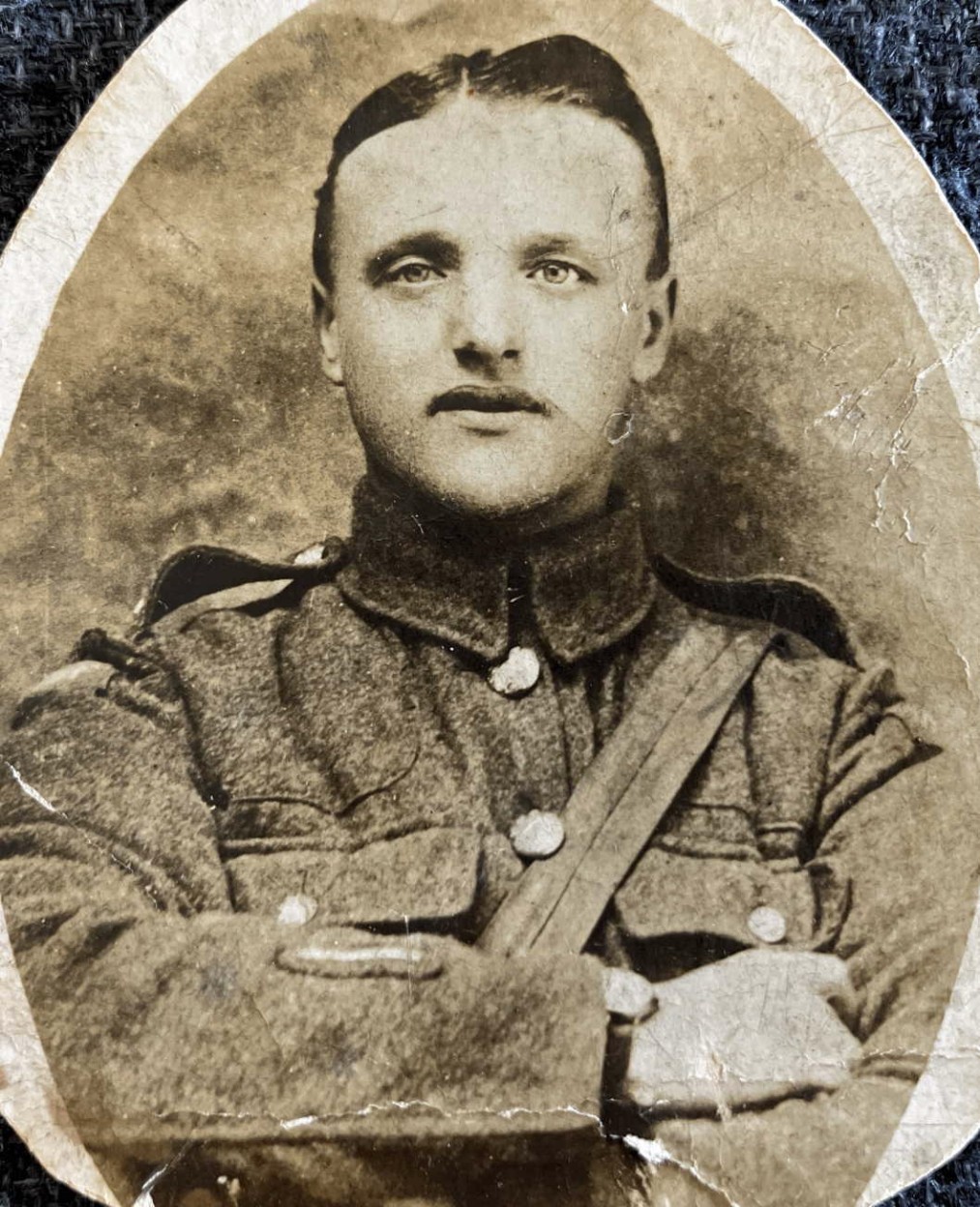
Information about birth
|
Date of birth: 07/03/1897 |
|
Place of birth: Whitby, Yorkshire, England, United Kingdom |
General information
|
Last known residence: Laverick Steps, Church Street, Whitby, Yorkshire, England, United Kingdom |
|
Profession: Printer |
|
Religion: Church of England |
Army information
|
Country: England, United Kingdom |
|
Force: British Expeditionary Force |
|
Rank: Private |
|
Service number: 203470 |
|
Enlistment date: 19/10/1914 |
|
Enlistment place: Whitby, Yorkshire, England, United Kingdom |
|
Units: — York and Lancaster Regiment, 4th Bn. (Last known unit) |
Information about death
|
Date of death: 09/10/1917 |
|
Place of death: Marsh Bottom, Passchendaele, Belgium |
|
Cause of death: Missing in action |
|
Age: 20 |
Memorial
|
Tyne Cot Memorial Panel: 125-128 |
Distinctions and medals 2
|
British War Medal Medal |
|
Victory Medal Medal |
Points of interest 4
| #1 | Place of birth | ||
| #2 | Last known residence | ||
| #3 | Enlistment place | ||
| #4 | Place of death (approximate) |
My story
Harry Howard was born on 7 March 1897 in Whitby, Yorkshire. His parents were William Henry and Margret Jane Howard. He was the eldest child in a family of four sons and five daughters. Harry worked as a printer.
On 19 October 1914, he enlisted in the British Army and was assigned to the 2/5th Battalion Yorkshire Regiment. He arrived in France on 8 July 1916. There, he was transferred to the 1/4th (Hallamshire) Battalion York & Lancaster Regiment, part of the 148th Brigade of the 49th (West Riding) Division.
On 7 September 1916, Harry was wounded. At the time, his battalion was serving in the vicinity of Thiepval during the Battle of the Somme. Two weeks later, he was able to return to his unit.
The 1/4th Battalion York & Lancaster Regiment spent eleven hours on the move before reaching its assembly positions for the attack at 4.00 a.m. on 9 October 1917. The attack began at 5.20 a.m. The battalion's objective was to advance eastwards from the area north of Berlin Wood, cross the Ravebeek, and then push on towards Marsh Bottom and Laamkeek before advancing further towards Meetcheele.
The crossing of the Ravebeek alone required enormous effort and resulted in heavy casualties. Many of the attackers also drifted to the left, where it was easier to cross the stream via the road between 's Graventafel and Mosselmarkt. German machine-guns in the area of Laamkeek and Waterfields subsequently inflicted severe losses on the British attackers. Eventually, the first objective, the area around Laamkeek, was reached. Further progress proved impossible, and the battalion consolidated its positions. German snipers and artillery fire, however, continued to cause casualties.
On 10 October 1917, the 1/4th Battalion York & Lancaster Regiment was relieved by a New Zealand battalion. Four officers and 42 other ranks had been killed, five officers and 199 other ranks had been wounded, while one officer and 48 other ranks were reported missing.
One of the missing soldiers was Harry Howard, aged 20. He is commemorated on the Tyne Cot Memorial, Panel 125-128.
Sources 2
|
1/4 Battalion York and Lancaster Regiment (The National Archives, KEW (TNA), WO 95/2805/1). https://discovery.nationalarchives.gov.uk/details/r/C7354668 Sources used |
|
Harry Howard, ancestry.com. https://www.ancestry.com/family-tree/person/tree/172393971/person/412239416990/facts Sources used |
More information 4
|
Commonwealth War Graves Commission Database https://www.cwgc.org/find-records/find-war-dead/casualty-details/837385 |
|
A Street Near You https://astreetnearyou.org/person/837385/ |
|
Namenlijst (In Flanders Fields Museum) https://namenlijst.org/publicsearch/#/person/_id=3f3167df-5540-4625-8919-8eedd3adc16e |
|
Lives of the First World War (Imperial War Museum) https://livesofthefirstworldwar.iwm.org.uk/lifestory/1979158 |