Pte
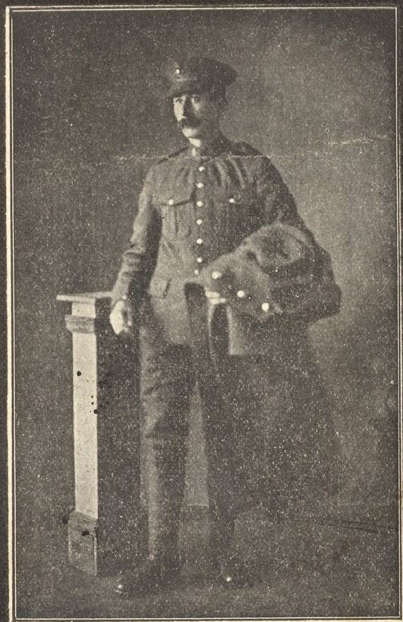
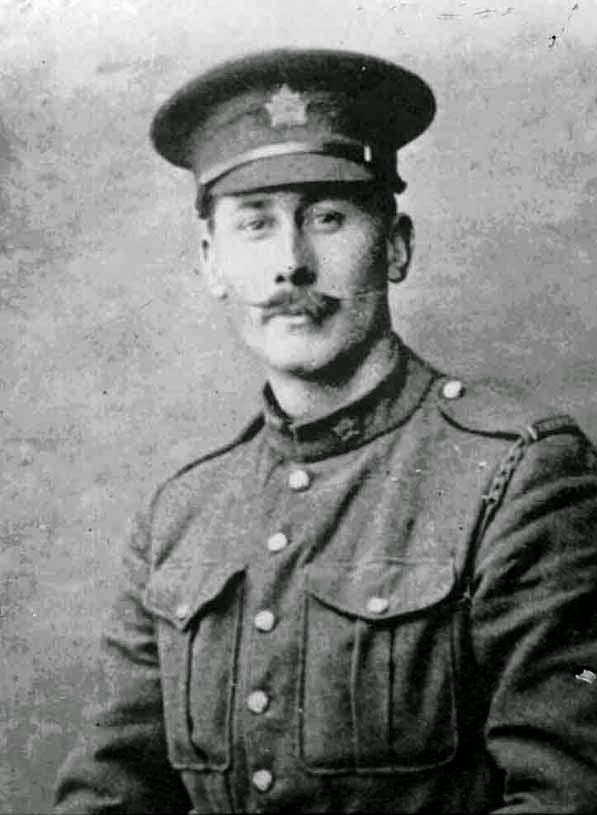
Richard Van Neste
Information about birth
|
Date of birth: 10/03/1880 |
|
Place of birth: Elsegem, Oost Vlaanderen, Belgium |
General information
|
Last known residence: 16 Aulneau Street, Saint Boniface, Manitoba, Canada |
|
Profession: Gardener |
Army information
|
Country: Canada |
|
Force: Canadian Expeditionary Force |
|
Rank: Private |
|
Service number: 216040 |
|
Enlistment date: 04/01/1916 |
|
Enlistment place: Winnipeg, Manitoba, Canada |
|
Units: — Canadian Infantry, 27th Bn. (City of Winnipeg) (Last known unit) |
Information about death
|
Date of death: 10/11/1917 |
|
Place of death: Lijssenthoek, Remy Siding, No. 10 Casualty Clearing Station, Belgium |
|
Cause of death: Died of wounds (D.O.W.) |
|
Age: 37 |
Cemetery
|
Lijssenthoek Military Cemetery Plot: XXII Row: HH Grave: 2 |
Distinctions and medals 2
|
British War Medal Medal |
|
Victory Medal Medal |
Points of interest 4
| #1 | Place of birth | ||
| #2 | Last known residence | ||
| #3 | Enlistment place | ||
| #4 | Place of death (approximate) |
My story
Richard Van Neste was born on 10 March 1880 in Elsegem, East Flanders. He was the son of Bruno Van Neste and Marie Verpoort. He married Marie Sidonie Vindevogel on 23 September 1903. Richard worked as an assistant teacher. By 1911, the couple had seven children, two of whom died at a very young age.
In March 1911, Richard travelled to Winnipeg, Manitoba (Canada) for the first time. He returned to Belgium in January 1912 and left again for Canada in March, this time together with his wife. In May 1914, Richard Van Neste was naturalized as a British subject. Later that year, he returned to Belgium to bring his children to Canada.
The German occupation made this task far from easy. In order to leave the country, Richard had to lie about his destination. He stated that he was travelling to the United States of America and thus succeeded in reaching Great Britain with his five children. On 24 December 1914, he arrived at the Government Refuge in Bermondsey (London), before continuing his journey to Halifax, Canada, on 1 January 1915. Richard was meanwhile working as a gardener in Saint Boniface, Manitoba, and another son was born in May 1915.
On 4 January 1916, Richard enlisted in the Canadian Army. He was assigned to the 100th Canadian Infantry Battalion (Winnipeg Grenadiers). On 18 September 1916, he embarked at Halifax aboard the HMT Olympic, the sister ship of the famous RMS Titanic, and arrived in Liverpool seven days later. He then underwent further training in Great Britain until his transfer to the 11th Canadian Reserve Battalion (Manitoba) on 20 January 1917. On 6 March 1917, he was transferred again, this time to the 27th Canadian Infantry Battalion (City of Winnipeg), before proceeding to the Western Front.
After a period of rest and training in Hazebrouck (Northern France), the 27th Canadian Infantry Battalion moved to Potijze in early November 1917. From there, the battalion proceeded on 5 November to Hill 37, northwest of Zonnebeke, and then to the front line, where it relieved the 29th Canadian Infantry Battalion (Vancouver) that same evening.
On 6 November 1917, the 27th Canadian Infantry Battalion was tasked with attacking from the vicinity of Crest Farm, advancing beyond the centre of Passchendaele in a north-westerly direction. The artillery barrage began precisely at 6 a.m. The German positions were effectively shelled, allowing the battalion to advance steadily. The strongest resistance came from rifle and machine-gun fire from the ruins of Passchendaele. Once the final objective had been reached, the captured positions were consolidated.
German artillery continued to bombard the area throughout the day and the following day, causing further casualties. In addition, both the shellfire and the terrible condition of the ground complicated the evacuation of the many wounded. An evacuation party consisting of one officer and 90 men worked continuously and succeeded in removing all the wounded. During the night of 7-8 November 1917, the 27th Canadian Infantry Battalion was relieved and returned to Potijze.
On 8 November 1917, Private Richard Van Neste was admitted to No. 1 Canadian Field Ambulance at Vlamertinge with a gunshot wound to his right leg. He was subsequently transferred to No. 10 Casualty Clearing Station at Lijssenthoek (Poperinge), where he died of his wounds on 10 November 1917. He was buried in Lijssenthoek Military Cemetery, Plot XXII, Row HH, Grave 2.
Richard Van Neste's widow returned to Belgium with her children in 1921. Two of the children returned to Canada after the Second World War.
Sources 3
|
Personnel Records of the First World War (Library and Archives Canada, Ottawa (LAC) RG 150, Accession 1992-93/166, Box 9907 - 48). https://central.bac-lac.gc.ca/.redirect?app=pffww&id=290147&lang=eng&ecopy=648813a Sources used |
|
Richard Van Neste - enige Vlaming op Lijssenthoek, lijssenthoek.be https://www.lijssenthoek.be/nl/nieuws/60/richard-van-neste---enige-vlaming-op-lijssenthoek.html Sources used |
|
War diaries: 27th Canadian Infantry Battalion (Library and Archives Canada, Ottawa (LAC), RG9-III-D-3, Volume number: 4935, Microfilm reel number: T-10738 - T-10739, File number: 423). https://central.bac-lac.gc.ca/.redirect?app=pffww&id=290147&lang=eng&ecopy=648813a Sources used |
More information 5
|
Commonwealth War Graves Commission Database https://www.cwgc.org/find-records/find-war-dead/casualty-details/432964 |
|
Namenlijst (In Flanders Fields Museum) https://namenlijst.org/publicsearch/#/person/_id=62a1b7d6-b556-479d-8280-e5ef758165ce |
|
Lives of the First World War (Imperial War Museum) https://livesofthefirstworldwar.iwm.org.uk/lifestory/5766457 |
|
The Canadian Virtual War Memorial https://www.veterans.gc.ca/en/remembrance/memorials/canadian-virtual-war-memorial/detail/432964 |
|
Commonwealth War Graves Commission Database https://www.cwgc.org/find-records/find-war-dead/casualty-details/432964 |