L/Cpl
Richard Verhaeghe
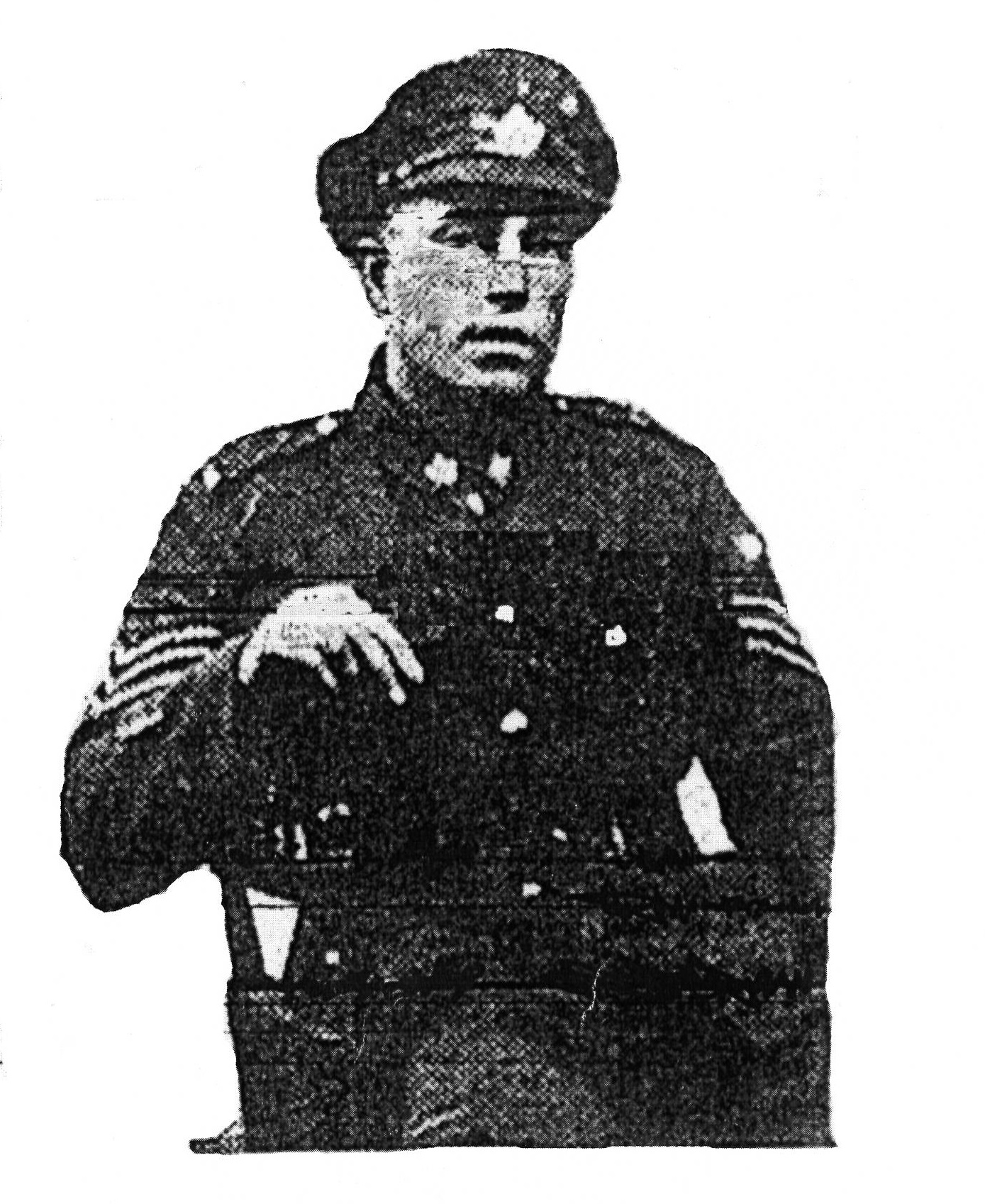
Information about birth
|
Date of birth: 27/04/1878 |
|
Place of birth: Zerkegem, West-Vlaanderen, Belgium |
General information
|
Profession: Motorman Street Railway |
Army information
|
Country: Canada |
|
Force: Canadian Expeditionary Force |
|
Rank: Lance Corporal |
|
Service number: 114186 |
|
Enlistment date: 16/08/1915 |
|
Enlistment place: Camp Hughes, Sewell, Manitoba, Canada |
|
Units: — Canadian Mounted Rifles, 5th Bn. (Last known unit) |
Information about death
|
Date of death: 30/10/1917 |
|
Place of death: Woodland Plantation, Belgium |
|
Cause of death: Killed in action (K.I.A.) |
|
Age: 39 |
Cemetery
|
Tyne Cot Cemetery Plot: XXVIII Row: H. Grave: 1. |
Distinctions and medals 3
|
British War Medal Medal |
|
Military Medal Medal — 06/01/1917 |
|
Victory Medal Medal |
Points of interest 2
| #1 | Place of birth | ||
| #2 | Enlistment place |
My story
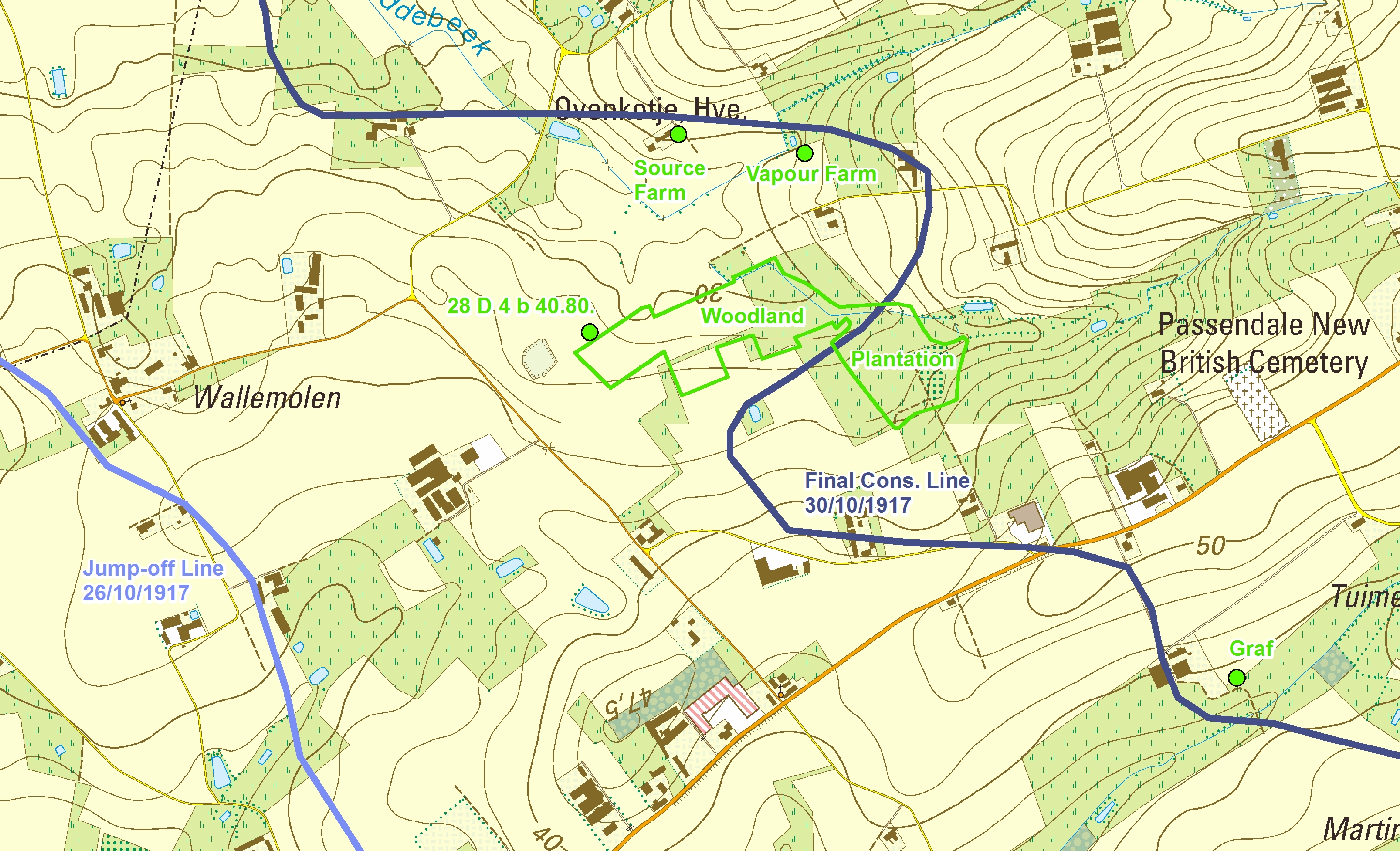
Lance Corporal Richard Vehaeghe served with the Canadian Mounted Rifles 5th Battalion, part of the 8th Canadian Brigade of the 3rd Canadian Division. The Battalion participated in the Second Battle of Passchendaele, which started on the 30th of October 1917. The final objective was the blue line near Goudberg, north of the Ravebeek. The attack took place in two waves. “A” and “C” company constituted the first wave. Their objective was to attack, capture and consolidate the blue line. “B” and “D” Company formed the second wave. They followed in close support of the first wave and they were to consolidate the intermediate objective (coordinates D.5.a.10.50 to V.28.d.30.40). In the morning of 30 October the troops were reported to be in readiness in their assembly positions. At 5.50 a.m., zero hour, a barrage of shell- and machine gun fire was put down. A few minutes later the Germans opened their barrage on the Battalions front- and support lines. The 5th Battalion of the Mounted Rifles had difficulty getting through the swampy ground in Woodland Plantation and have to go ‘around’ the area, north of the Bellevue Ridge. By mid-afternoon, the 3rd Canadian Division was well up on the Blue Line on the extreme left, but on the right flank they were held up at Graf House, near Meetcheele. Under the command of Major G. R. Pearkes, elements of “C” and “D” company of the 5th Bn. Mounted Rifles seized and held Vapour- and Source Farm. To defend their positions, Major Pearkes formed a defensive flank on the left and continued a short distance past Source Farm with the right flank resting on Woodland Plantation. They suffered considerable casualties, due to several German counterattacks, while holding the positions. There was a need for reinforcements, but it was difficult to send reinforcements, due to the isolated position and the bad condition of the ground in Woodland Plantation. It is difficult to determine the exact moment when Lance Corporal Verhaeghe was killed in action. The men were scattered all over no man’s land. It’s possible he became a casualty during the attack on the 30th of October while going to the Battalion’s objective, the blue line. It is not clear if he was part of the first wave, or if he was sent to reinforce the position at Vapour- and Source Farm. However His remains were found at the following coordinate 28. D. 4. b. 40.80 which is in the northwest of Woodland Plantation. In the late afternoon, the Canadian advance had reached its limit and reports of large numbers of Germans concentrating north of Mosselmarkt, pointed to a major counterattack. The 3rd Division received the order to consolidate their positions. At 1.35 a.m. of the 31st of October, the 5th Bn. Mounted Rifles were relieved and moved back into the intermediate area with Headquarters at Capricorn Keep near Pond Farm at St. Juliaan.
Sources 5
|
Col. Nicholson G.W.L., Canadian Expedition Force 1914-1919 - Official History of the Canadian Army in the First World War, (Ottawa, Queen's Printer, 1962), pg. 320-323. Sources used |
|
McCarthy C., The Third Ypres Passchendaele. The Day-by-Day Account, (London, Arms & Armour Press, 1995), pg. 133,137. Sources used |
|
Personnel Records of the First World War (Library and Archives Canada, Ottawa (LAC) RG 150, Accession 1992-93/166, Box 9931 - 47). https://www.bac-lac.gc.ca/eng/discover/military-heritage/first-world-war/personnel-records/Pages/search.aspx Sources used |
|
Verhaal Richard Verhaeghe http://www.fotoshootwo100.com/article.php?id=546 Further reference |
|
War Diary 5th Battalion Canadian Mounted Rifles, (Library and Archives Canada, Ottawa (LAC), RG9-III-D-3, Volume number: 4949, Microfilm reel number: T-10760, File 473). https://library-archives.canada.ca/eng Sources used |
More information 5
|
Commonwealth War Graves Commission Database https://www.cwgc.org/find-records/find-war-dead/casualty-details/464990 |
|
Namenlijst (In Flanders Fields Museum) https://namenlijst.org/publicsearch/#/person/_id=b2ce45d4-59c5-4173-b83e-724b0ac653fa |
|
Lives of the First World War (Imperial War Museum) https://livesofthefirstworldwar.iwm.org.uk/lifestory/5161690 |
|
Lives of the First World War (Imperial War Museum) https://livesofthefirstworldwar.iwm.org.uk/lifestory/6099230 |
|
The Canadian Virtual War Memorial https://www.veterans.gc.ca/eng/remembrance/memorials/canadian-virtual-war-memorial/detail/464990 |