Pte
William Hicks
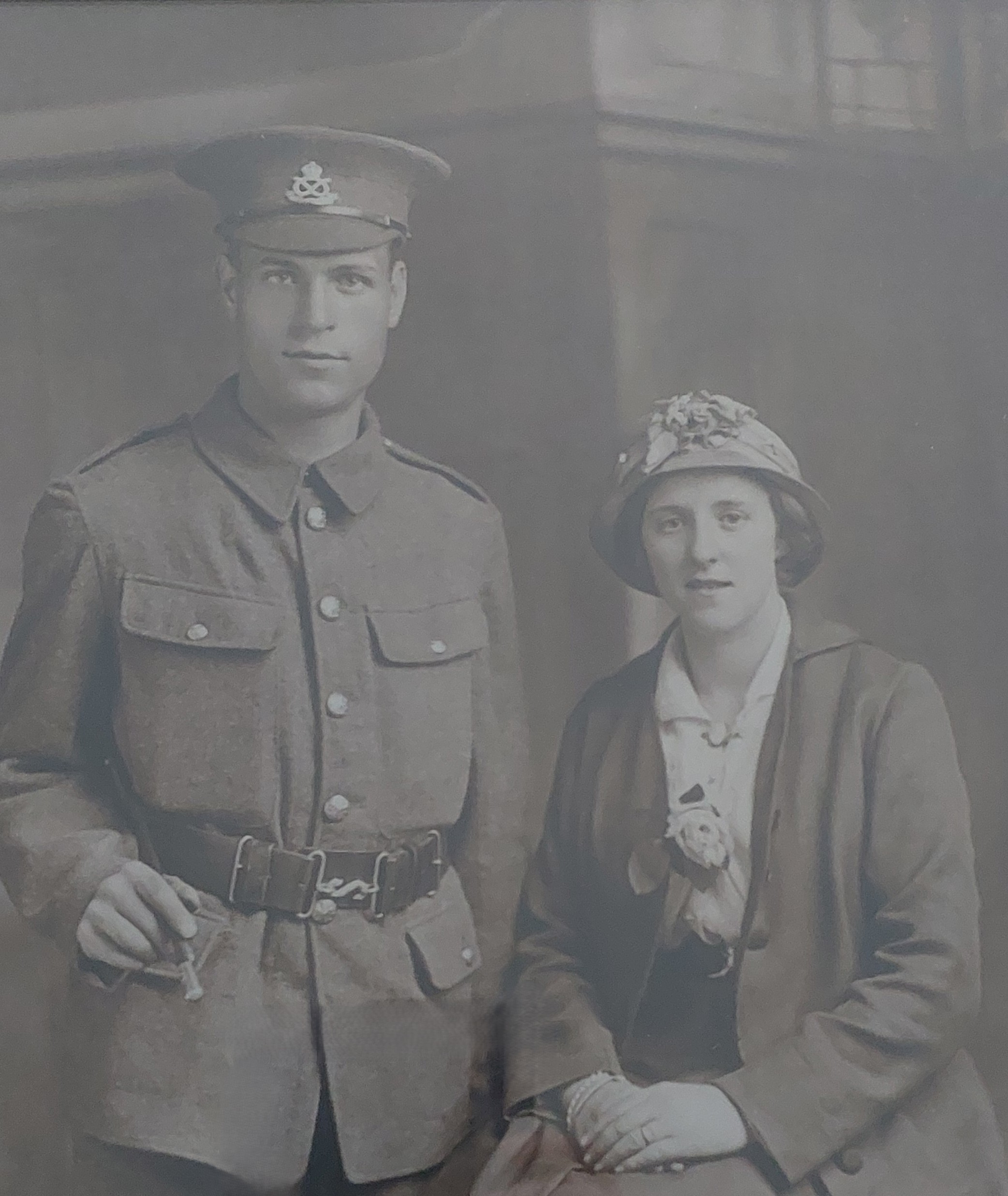
Information about birth
|
Date of birth: 03/09/1891 |
|
Place of birth: Dudley, Worcestershire, England, United Kingdom |
General information
|
Last known residence: 40 Gammage Street, Dudley, Worcestershire, England, United Kingdom |
|
Profession: Accountant |
|
Religion: Unitarian |
Army information
|
Country: England, United Kingdom |
|
Force: British Expeditionary Force |
|
Rank: Private |
|
Service number: 9841 |
|
Enlistment date: 12/12/1915 |
|
Enlistment place: Dudley, Worcestershire, England, United Kingdom |
|
Units: — Honourable Artillery Company, 2/1st Bn. (Last known unit) |
Information about death
|
Date of death: 07/10/1917 |
|
Place of death: Polygon Wood, Zonnebeke, Belgium |
|
Cause of death: Killed in action (K.I.A.) |
|
Age: 26 |
Memorial
|
Tyne Cot Memorial Panel: 7 |
Distinctions and medals 2
|
British War Medal Medal |
|
Victory Medal Medal |
Points of interest 4
| #1 | Place of birth | ||
| #2 | Last known residence | ||
| #3 | Enlistment place | ||
| #4 | Place of death (approximate) |
My story
William Hicks was born in September 1891 in Dudley, a Worcestershire enclave in the heart of the Black Country in Staffordshire. He was the son of William and Selina Hicks. After his father’s death, the family moved to Gammage Street. William was active in the Unitarian Church, a liberal and individualistic movement within Christianity that rejects the Trinity and emphasizes universal values.
At the end of 1915, William volunteered. The twenty-four-year-old accountant and treasurer of the Unitarian Church expressed his wish to serve in the Royal Army Medical Corps, but a few weeks later he was called up for the infantry, joining the Honourable Artillery Company, 2nd Battalion (22nd Brigade, 7th Division). The term “Artillery” here refers to an older designation for infantry armed with firearms and sling weapons, not heavy guns. From April 1917 onwards, William served with his unit at the front.
During the Battle of Passchendaele, at the end of September 1917, the 7th Division relieved the 5th Australian Division at Polygon Wood in Zonnebeke. The 2nd Honourable Artillery Company initially remained in reserve. On 4 October, the division reached the important ridge near Noordemdhoek, between Broodseinde and Beselare, while Reutel and the heights on the right flank remained in German hands.
During the night of 7 to 8 October, the 2nd HAC was ordered to take over the front line at Reutel in preparation for an attack on 9 October. The route through Polygon Wood, no more than a succession of shell holes and shattered trunks and stumps, consisted of a single narrow duckboard track winding through the devastation. The track was under fire from German field artillery. One shell fell directly between “C” and “D” Companies, killing or wounding half a dozen men. A brief halt was made at the objective ridge, after which guides led the battalion to the front line. A little further on, on the way to Jolting House Trench, “D” Company was hit again by artillery fire.
By three o’clock in the morning, the relief was completed. Despite the heavy artillery fire and the cratered terrain, the War Diary euphemistically recorded a smooth relief with limited losses. In reality, there were seventeen casualties, ten of whom were killed. With the exception of one soldier who died at an ambulance unit and one whose body was found near Glencorse Wood, they are all commemorated on the Tyne Cot Memorial to the Missing.
William Hicks, aged twenty-six, was killed on 7 October 1917. He left behind a young fiancée and a daughter barely a month old. To this day, he has no known grave and is commemorated on the Tyne Cot Memorial, panel seven.
Sources 4
|
2 Battalion Honourable Artillery Company (The National Archives, KEW (TNA), WO 95/1662/1). https://www.nationalarchives.gov.uk/ Sources used |
|
Census Returns of England and Wales, 1911 (The National Archives, Kew (TNA), RG14). https://www.nationalarchives.gov.uk/ Sources used |
|
Walker G., The honourable artillery company in the Great War : 1914-1919, (London, Seeley Service & Co., 1930), pp. 322-323. Sources used |
|
War Office: Soldiers Documents (The National Archives, Kew (TNA) WO363). https://www.nationalarchives.gov.uk/ Sources used |
More information 4
|
Commonwealth War Graves Commission Database https://www.cwgc.org/find-records/find-war-dead/casualty-details/836439 |
|
A Street Near You https://astreetnearyou.org/person/836439/ |
|
Namenlijst (In Flanders Fields Museum) https://namenlijst.org/publicsearch/#/person/_id=093a5cd8-23c3-4303-83bc-0cfc613f4d46 |
|
Lives of the First World War (Imperial War Museum) https://livesofthefirstworldwar.iwm.org.uk/lifestory/1860986 |