Pte
James Farrell

Informations sur naissance
|
Année de naissance: 1896 |
|
Lieu de naissance: Tunstall, Staffordshire, Angleterre, Royaume-Uni |
Informations générales
|
Profession: Ouvrier métallurgiste |
Informations service militaire
|
Pays: Angleterre, Royaume-Uni |
|
Force armée: British Expeditionary Force |
|
Rang: Private |
|
Numéro de service: 16295 |
|
Incorporation date: 01/02/1915 |
|
Incorporation nom de lieu: Stoke-on-Trent, Staffordshire, Angleterre, Royaume-Uni |
|
Unités: — Duke of Wellington's (West Riding Regiment), 2nd Bn. (Dernière unité connue) |
Informations sur décès
|
Date de décès: 28/09/1917 |
|
Lieu de décès: Kangaroo Trench, Belgique |
|
Cause du décès: Killed in action (K.I.A.) |
|
Âge: 21 |
Cimetière
|
Poelcapelle British Cemetery Parcelle: XLII Rangée: D Tombe: 18 |
Distinctions et médailles 3
|
1914-15 Star Médaille |
|
British War Medal Médaille |
|
Victory Medal Médaille |
Points d'intérêt 2
| #1 | Lieu de naissance | ||
| #2 | Lieu d'enrôlement |
Mon histoire
Private James Farrell, a former roll turner, served in the 2nd Battalion Duke of Wellington’s (West Riding Regiment), which was part of the 12th Brigade, 4th Division.
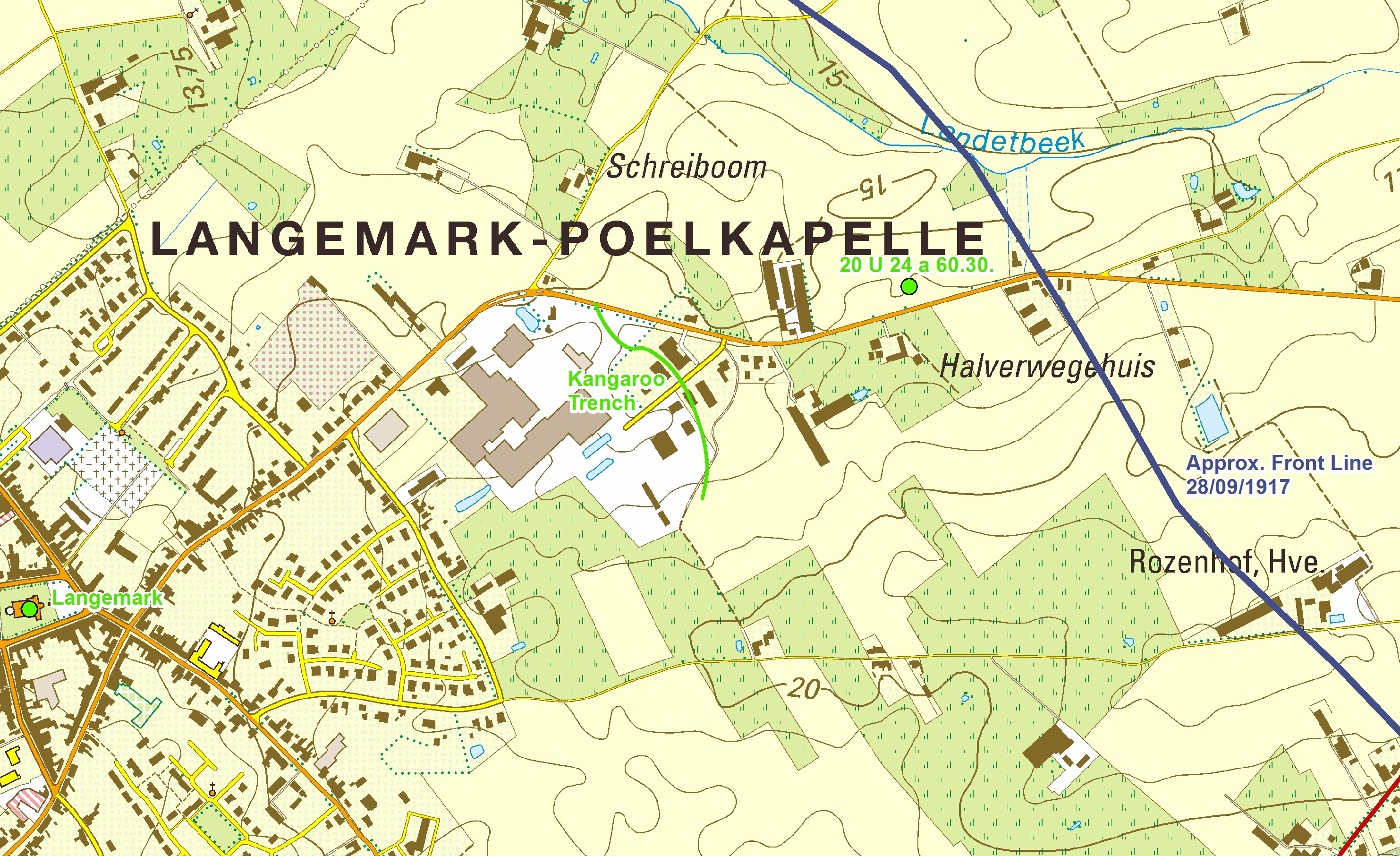
On the 28th of September 1917, the day Private Farrell died, the battalion marched from their camp at Canal Bank to the front line near Kangaroo Trench (northeast of Langemark) in preparation for the upcoming Battle of Broodseinde on the 4th of October 1917.
His Burial Return Sheet notes that his grave was found in 20. V24.a.6.3. This point is located north of Passchendaele along the road to Westrozebeke (Passendalesteenweg). This is unlikely, however, since Passchendaele was still firmly in German hands at this time. It’s more likely that a transcription error was made by confusing the letters ‘V’ and ‘U’. The coordinate 20. U24.a.6.3. would place his grave at the destination of the battalion on the 28th, the assembly area at the front.
Although the War Diary does not mention any casualties on that day, it’s possible that the battalion commander was notified at a later date of Private Farrell’s death. After the war he was reburied at Poelcapelle British Cemetery.
On the 28th of September 1917, the day Private Farrell died, the battalion marched from their camp at Canal Bank to the front line near Kangaroo Trench (northeast of Langemark) in preparation for the upcoming Battle of Broodseinde on the 4th of October 1917.
His Burial Return Sheet notes that his grave was found in 20. V24.a.6.3. This point is located north of Passchendaele along the road to Westrozebeke (Passendalesteenweg). This is unlikely, however, since Passchendaele was still firmly in German hands at this time. It’s more likely that a transcription error was made by confusing the letters ‘V’ and ‘U’. The coordinate 20. U24.a.6.3. would place his grave at the destination of the battalion on the 28th, the assembly area at the front.
Although the War Diary does not mention any casualties on that day, it’s possible that the battalion commander was notified at a later date of Private Farrell’s death. After the war he was reburied at Poelcapelle British Cemetery.
Sources 4
|
Ancestry https://www.ancestry.com Sources utilisées |
|
CWGC https://www.cwgc.org/find-war-dead/casualty/491463/farrell,-james/ Sources utilisées |
|
Naval & Military Archive http://www.nmarchive.com/ Sources utilisées |
|
The long long trail https://www.longlongtrail.co.uk/army/ Sources utilisées |